AKC is a participant in affiliate advertising programs designed to provide a means for sites to earn advertising fees by advertising and linking to akc.org. If you purchase a product through this article, we may receive a portion of the sale.
Watching your dog leap into a swimming pool on a hot summer day can be a lot of fun. The good news is that most dogs can safely swim in a properly maintained chlorinated pool.
In This Article
Small amounts of pool water aren’t usually harmful, but dogs should be discouraged from drinking it, rinsed off after swimming, and supervised around water. The greatest chlorine-related concern isn’t the pool itself but access to chlorine tablets, which can be toxic if ingested.
Is Chlorine Safe for Dogs?
When humans swim in a pool, chlorine levels are generally considered safe, even if a small amount of water is swallowed accidentally. The same is generally true for most dogs.
Some dogs, however, have more sensitive eyes and ears than people. While chlorine itself isn’t usually a problem at normal pool concentrations, dogs with floppy ears may be more likely to develop ear infections because moisture becomes trapped in the ear canal after swimming.
“As far as chlorine, the amount in a pool is negligible, but the toxic concerns are with dogs getting into chlorine tablets, so they should be put in a safe location where a dog cannot ingest them,” notes Dr. Jerry Klein, Chief Veterinarian for the American Kennel Club.
Some pool owners choose alternatives such as bromine. Bromine is generally considered safer for pets, although it may be more expensive than chlorine.
After your dog swims, rinse their coat with fresh water to remove residual pool chemicals and gently dry their ears with a towel to help prevent moisture-related infections.
Is Pool Water Safe for Dogs to Drink?
If your dog drinks a small amount of chlorinated pool water from a properly maintained pool, they’ll likely be fine. Most swimming pools contain relatively low chlorine levels that aren’t harmful in small amounts. However, drinking large quantities of pool water can cause irritation and may lead to digestive upset, including vomiting and irritation of the esophagus.
Proper pool maintenance is important. If chlorine levels are too low, untreated water can harbor algae, parasites, and bacteria. If chlorine levels are too high, the water may be irritating.
Whenever a pool undergoes chemical shock treatment, keep dogs away until the water chemistry has returned to safe levels.
As with swimming, the biggest toxic concern remains chlorine tablets themselves. These products should always be stored securely where dogs cannot access them.
How to Stop Dogs From Drinking Pool Water
Some dogs repeatedly drink pool water while swimming or playing nearby. Providing alternatives and redirecting the behavior can help:
- Keep a bowl of fresh drinking water nearby and easily accessible
- Consider a pet water fountain if your dog seems uninterested in a standard water bowl
- Watch for signs of dehydration, overheating, or heatstroke during hot weather
- Bring your dog inside for a break if they continue drinking pool water
- Use a favorite toy or a recall cue to redirect attention away from the pool

Symptoms of Water Intoxication in Dogs
Although uncommon, water intoxication can occur when a dog consumes too much water too quickly, regardless of whether the water comes from a pool, lake, or water bowl.
Symptoms of water intoxication include:
- Vomiting
- Lethargy
- Bloating
- Loss of coordination, including stumbling, falling, or staggering
- Restlessness
- Drooling
- Pale gums
- Dilated pupils
- Glazed eyes
If your dog shows any of these symptoms, contact your veterinarian immediately and seek care as soon as possible.
Pool Safety Tips for Dogs
Swimming can be excellent exercise and enrichment for many dogs, but safety should always come first.
The biggest misconception is how your dog actually approaches swimming. “Not all dogs want to swim and those that don’t can be encouraged, but should not be forced,” Dr. Klein adds.
Allow your dog to approach the pool at their own pace and praise them throughout the experience. Never throw a dog into a pool. Dogs that are unfamiliar with water may become frightened and panic.
Many dogs are natural swimmers, but they still need guidance, especially when learning how to enter and exit the pool safely. Tossing a favorite toy into shallow water or entering the pool yourself can help build confidence.
First-time swimmers often struggle to find their way out of a pool. Dogs don’t instinctively understand how to use pool steps or ladders. If a dog begins thrashing in the water, they can quickly become exhausted and may be at risk of drowning.
To keep swim time safe:
- Supervise dogs around pools at all times
- Teach your dog where the pool steps or ladders are located
- Use treats or toys to encourage safe, confident exits
- Install a secure fence around the pool to help prevent accidents
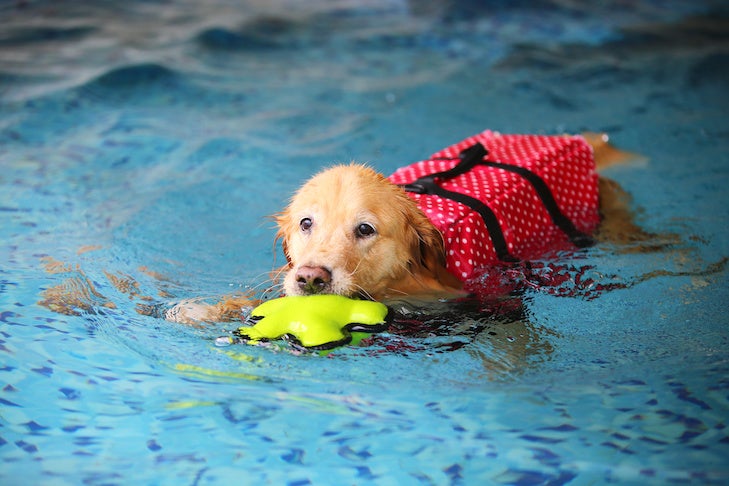
- Consider using a dog life jacket if your dog isn’t a strong swimmer
With proper supervision and the right precautions, spending time in the pool can be a safe, refreshing way for your dog to beat the summer heat.
Key Takeaways
- Most dogs can safely swim in properly maintained chlorinated pools.
- Rinsing your dog after swimming and drying their ears can help prevent irritation and moisture-related ear issues.
- Small amounts of pool water are usually not harmful, but dogs should be discouraged from drinking it regularly.
- Chlorine tablets pose a much greater danger than chlorinated pool water and should always be stored securely.
- Supervision, pool-exit training, and pool fencing are important for preventing accidents and drowning.
Frequently Asked Questions
-
Can chlorine irritate a dog’s eyes or ears?
+
Some dogs are more sensitive to pool chemicals than others. While normal chlorine levels are generally safe, rinsing your dog after swimming and drying their ears can help reduce irritation and moisture-related problems.
-
Are chlorine tablets dangerous for dogs?
+
Yes. Chlorine tablets are the most significant chlorine-related hazard for dogs. They should always be stored in a secure location where pets cannot access them.
-
Should I rinse my dog after swimming in a pool?
+
Yes. Rinsing your dog with fresh water helps remove residual pool chemicals from their coat and skin. Drying the ears afterward can also help prevent infections.
-
How much pool water is too much for a dog to drink?
+
Small amounts are typically not a concern. Drinking large amounts, however, may cause stomach irritation, vomiting, or contribute to water intoxication.
-
Do all dogs know how to swim?
+
No. While many dogs are natural swimmers, not all dogs enjoy or understand swimming. Dogs should be introduced to water gradually and never forced into a pool.
This article is intended solely as general guidance, and does not constitute health or other professional advice. Individual situations and applicable laws vary by jurisdiction, and you are encouraged to obtain appropriate advice from qualified professionals in the applicable jurisdictions. We make no representations or warranties concerning any course of action taken by any person following or otherwise using the information offered or provided in this article, including any such information associated with and provided in connection with third-party products, and we will not be liable for any direct, indirect, consequential, special, exemplary or other damages that may result, including but not limited to economic loss, injury, illness or death.