When it comes to dogs, not all yawns mean the same thing. While many owners associate yawning with stress, dogs may yawn for a variety of reasons, including communication, social interactions, and even in response to other yawns. Researchers still don’t fully understand why dogs or humans yawn, but many believe it plays an important role in social communication.
In This Article
What Researchers Know About Yawning
Scientists once believed yawning helped replenish the brain’s oxygen supply, but research hasn’t found evidence to support that theory.
Yawning also doesn’t appear to simply wake up a tired brain, even though people and dogs often yawn when they’re bored or sleepy. Because yawning occurs more frequently in warm environments, some researchers believe it may help cool the brain. However, more research is needed before firm conclusions can be made.
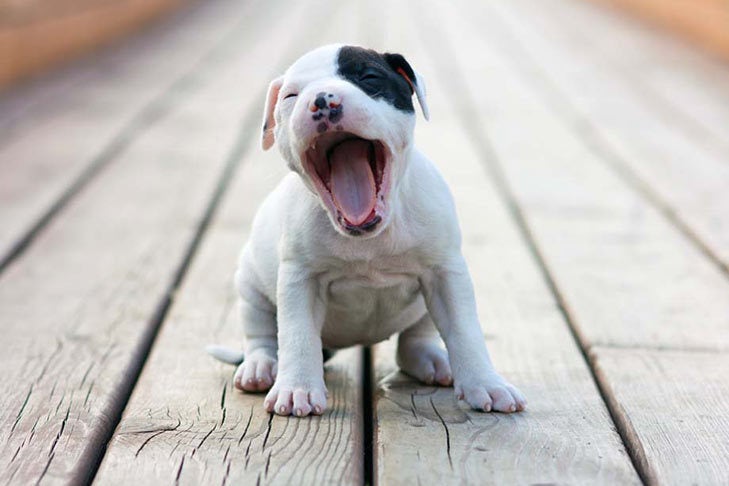
Yawning Can Be a Sign of Stress
Trainers and behaviorists often encourage owners to watch for signs of stress in their dogs, excessive yawning can be one of them. Dogs do appear to yawn when they’re feeling anxious or uncomfortable.
For example, a dog in an obedience class may yawn when feeling pressure or displeasure from their owner. The behavior can appear as though the dog recognizes that correction or punishment may be coming.
You might also notice your dog yawning during a walk when you stop to chat with a neighbor. In some cases, the dog may feel uneasy about the unfamiliar person. They could also just be anxious to get moving again. After all, a dog excited to go on a walk certainly doesn’t want to stop and sit around for 20 minutes.
Because yawning can have multiple meanings, it’s important to consider the situation and look for other signs of stress before assuming anxiety is the cause.
Dogs Use Yawns to Diffuse Tension
Both domesticated dogs and wild canids use yawning as a social signal. When faced with an aggressive dog, another dog may yawn back. Rather than signaling submission, the yawn can show a lack of interest in conflict and help ease social tension.
This type of yawning, often called a pacifying behavior, signals that the dog doesn’t want to escalate the interaction.
Dominant dogs and wolves may also yawn when interacting with submissive or fearful animals. In these situations, the yawn seems to signal calm, unconcerned body language, which can help ease the other animal’s anxiety.

Yawns Can Be Contagious
Most people know that yawns are contagious, but the behavior isn’t limited to humans. Researchers and observers have found that dogs can catch yawns from other dogs and from people.
Dogs often yawn in response to another dog yawning. They may also catch a yawn from a familiar human, especially someone they’re close to.
Many researchers think this contagious yawning may be linked to empathy, suggesting that dogs are highly attuned to the emotions and behaviors of both humans and other dogs. They continue to investigate the phenomenon, but contagious yawning remains one of the more intriguing aspects of canine behavior.
Understanding Your Dog’s Yawn
A yawn by itself rarely tells the whole story. The meaning often depends on the circumstances, your dog’s body language, and what is happening around them.
A dog that yawns repeatedly during a stressful situation may be signaling anxiety. A dog that yawns during a tense social interaction may be trying to diffuse conflict. And sometimes, a yawn is simply part of normal daily behavior.
The next time your dog yawns, consider the context before assuming they’re stressed or anxious. While anxiety can certainly be a factor, yawning is often just another way dogs communicate with the world around them.
Key Takeaways
- Dogs yawn for several reasons, and stress is only one possible explanation.
- Excessive yawning can be a sign of anxiety, discomfort, or uncertainty in a situation.
- Dogs may yawn to communicate peaceful intentions and reduce social tension.
- Yawning can be contagious between dogs and may even occur between dogs and people.
- Occasional yawning is a normal behavior and often doesn’t indicate a problem.
Frequently Asked Questions
-
Why does my dog yawn when we're training?
+
Dogs may yawn during training if they’re feeling stressed, uncertain, or sensitive to pressure. The behavior can be one of several signals that your dog is experiencing discomfort in the situation.
-
Does yawning always mean a dog is anxious?
+
No. While yawning can be associated with stress, dogs also yawn as part of normal behavior, to communicate peaceful intentions, or in response to another dog or person yawning.
-
Can dogs catch yawns from humans?
+
Yes. Dogs have been observed yawning in response to human yawns, especially when the person is someone they know well.
-
Why do dogs yawn around other dogs?
+
Dogs may yawn to defuse tension, signal disinterest in conflict, or simply because yawning can be contagious between dogs.
-
Should I worry if my dog yawns a lot?
+
Frequent yawning is worth evaluating in context. If it occurs alongside other signs of stress or discomfort, it may indicate that your dog is feeling anxious. Occasional yawning by itself is usually normal.