AKC is a participant in affiliate advertising programs designed to provide a means for sites to earn advertising fees by advertising and linking to akc.org. If you purchase a product through this article, we may receive a portion of the sale.
Learning how to potty train a puppy is one of the most important first steps you can take for a long, happy life together. Successful housetraining starts as soon as your puppy comes home and relies on consistency, supervision, a predictable schedule, and positive reinforcement. Whether you use a crate, puppy pads, or another approved potty area, providing frequent opportunities for success helps your puppy learn where to go — and where not to.
In This Article
When Should You Start Potty Training a Puppy?
Potty training should begin the day your puppy comes home. Puppies start learning household routines immediately, and consistent expectations from the start can help prevent bad habits from forming.
Most puppies arrive at their new homes when they’re around 8 weeks old, which also happens to be when their bladder control is at its weakest. At this stage, they’ll need frequent trips outside. As your puppy grows, their bladder control will improve and they’ll be able to hold it longer between breaks.
Regardless of your dog’s age, starting housetraining right away helps them understand where they should go and build the routines that support long-term success.
Why Potty Training Is Important
From learning their name to mastering basic obedience and socialization skills, your new puppy has a lot to learn.
Housetraining should be near the top of that list: it builds the foundation for good habits and a positive relationship between you and your dog. Plus, it helps your puppy establish routines, keeps your home cleaner, and teaches your puppy what behaviors are expected.
The earlier you begin with consistent expectations, the easier it is for your puppy to understand where and when they should go.

Choosing the Right Potty Training Method
There are several effective approaches to housetraining. According to Mary Burch, Ph.D., director of the AKC Canine Good Citizen and S.T.A.R. Puppy programs, there are pros and cons to each, but they can all work well when paired with consistency and proper supervision.
Crate Training
Dog crates are among the most effective housetraining tools. They also help dogs become comfortable with vet visits, traveling, and other situations where confinement may be necessary.
Dogs naturally seek den-like spaces, making crates appealing when introduced properly. A crate should be large enough for your puppy to stand, turn around, and lie down comfortably, but not so large that they can go potty in one corner and rest in another. Many crates include adjustable partitions so you can adjust the size as your puppy grows.
The principle behind crate training is simple: dogs generally prefer not to soil their sleeping area. When a puppy needs to go, they’ll often signal by whining, scratching, or becoming restless. Responding promptly helps strengthen the connection between holding it and going outside.
Puppy Pads and Indoor Potty Areas
Dr. Burch says the use of puppy pads and paper training can be tricky. “You’re reinforcing two different options for the puppy,” she explains.
In an ideal situation, puppies would learn to hold it indoors and only eliminate outdoors. However, puppy pads may be useful for owners who cannot return home frequently during the day or for people with very small dogs living in areas with severe winter weather.
Puppy pads give a dog the option of relieving themselves in an approved spot at home. There are also indoor dog potties that even work for male dogs. As the dog matures, owners can gradually transition to training their dog to go outside.

How to Create a Puppy Potty Training Schedule
Keeping a consistent schedule is essential for successful housetraining. Puppies have small bladders and immature digestive systems, which means they need frequent bathroom breaks.
A common guideline is that puppies can generally hold their bladder for approximately the same number of hours as their age in months, up to about 9 months to 1 year of age. For example, a 6-month-old puppy may be able to hold it for around six hours. Individual puppies’ needs and behaviors vary, however, and some may need more frequent trips outside.
Very young puppies should typically be taken out:
- First thing in the morning
- Last thing at night
- After naps
- After spending time in a crate
- After meals
- After drinking water
- After chewing toys or bones
- After indoor play sessions
Depending on your puppy’s age, this could mean going outside a dozen times or more each day. If your schedule makes that difficult, consider arranging for a trusted friend, neighbor, or dog walker to help maintain consistency.
The faster your puppy learns where they’re supposed to go, the easier the housetraining process becomes.
Learning Your Puppy’s Signals
Every puppy develops individual bathroom habits. Some can hold it longer than others, while some need a bathroom break every time they become excited or active.
Pay close attention to your puppy’s behavior. Common signs they need to go out include:
- Sniffing the ground
- Circling
- Suddenly stopping play
- Whining or scratching at a door
- Becoming restless
Careful observation allows you to anticipate your puppy’s needs before accidents happen. Prevention is often easier than correction.

How Diet Affects Housetraining
A puppy’s feeding routine plays an important role in bathroom habits. Because puppies have developing digestive systems, most do best with several smaller meals rather than one or two large ones.
The type of food matters as well. Choose a high-quality puppy food that agrees with your dog and produces healthy stools.
Monitoring your puppy’s stool can provide valuable information. If their stools are routinely loose, bulky, or unusually foul-smelling, consider talking to your veterinarian. They might recommend switching to a new dog food or changing when and how much you feed your dog. Overfeeding can also contribute to diarrhea, which will make housetraining considerably more challenging.
Teach a Potty Cue From Day One
Adding a verbal cue can help your puppy understand exactly what you want them to do when you take them outside.
Choose a simple phrase such as “Go potty” and say it calmly each time your puppy begins to urinate or defecate in the correct location. Over time, your puppy will start to associate the cue with the behavior.
When your puppy finishes, immediately reward them with praise and a treat. Consistently pairing the cue, the action, and the reward can make bathroom trips more efficient and help reinforce good habits in new environments.
How Long Does It Take to Potty Train a Puppy?
The timeline for housetraining varies significantly from puppy to puppy. Age, previous experiences, consistency, and training methods all influence how quickly a puppy learns.
For example, an 8-week-old puppy has very different physical and developmental capabilities than a 5-month-old puppy. Some puppies develop reliable habits within days, while others may require several months, especially if they have experienced inconsistent routines before joining your home.
With patience, persistence, and a consistent training plan, most puppies can learn where and when to go.
How to Reinforce Potty Training Success
Positive reinforcement is one of the most effective training tools available. Puppies learn faster when they’re rewarded for correct behavior rather than punished for mistakes.
When your puppy eliminates in the right spot, immediately shower them with enthusiastic praise and a small, high-value treat. Be effusive in your praise — cheer, clap, throw cookies. Let them know that no other accomplishment, ever, has been as important as this pee.
Small treats are ideal for training because they’re easy for puppies to digest and allow for frequent rewards without overfeeding.
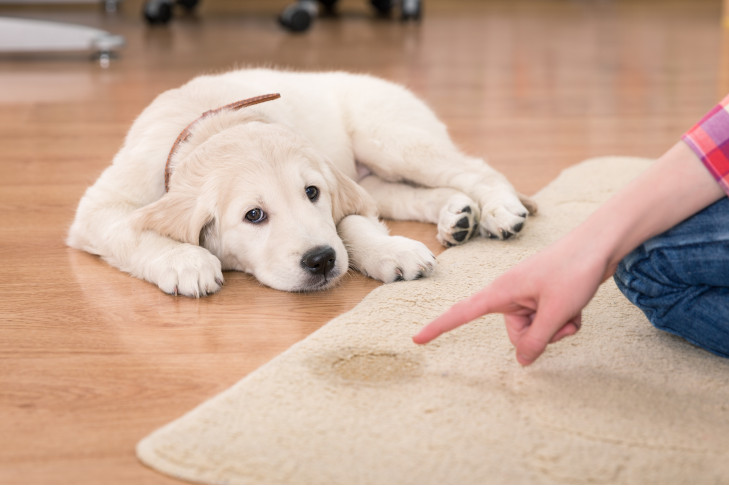
If your dog has an accident, Dr. Burch advises against making a fuss — just clean up the mess. Be sure to clean the area thoroughly using a odor-neutralizing product that removes lingering scents that could attract your puppy back to the same spot.
If you catch your puppy beginning to urinate or defecate indoors, calmly pick them up and move them outside immediately. If they finish in the correct location, reward them generously.
Common Puppy Potty Training Problems
With careful training and management, most puppies become reliably house-trained. But sometimes, training doesn’t go as planned. Here are some common complaints that trainers encounter:
Why Is My Puppy Having Accidents Throughout the House?
This complaint is common among owners of toy breeds. Some trainers recommend teaching puppies to use indoor potty spots, similar to how a cat uses a litter box. Options include pee pads and dog potty boxes made for indoor use.
Consistency remains critical. You can successfully train small dogs, but the process may require additional patience and close management.
Why Does My Puppy Keep Going Back to the Same Spot?
In many cases, lingering odors are the culprit. Dogs frequently return to areas that still smell like previous accidents.
Keep enzymatic pet stain cleaners on hand and follow product instructions carefully to get rid of odors completely.
Why Did My Puppy Start Having Accidents After Getting More Freedom?
Many owners expand access to the home too quickly. Even when your puppy appears to understand expectations around going potty, continue following your routine and supervision plan until the behavior is firmly established.
Gradually increasing freedom tends to be more successful than giving unrestricted access too early.
Why Is My Puppy Soiling Their Crate?
According to Dr. Burch, this issue often shows up in rescued dogs who previously spent long stretches of time confined without no chance to go anywhere else.
In these situations, you’ll usually need to return to the basics of crate training and housetraining. Focus on:
- Evaluating how long your dog can comfortably hold their bladder and bowels
- Maintaining a regular feeding schedule
- Providing frequent outdoor bathroom breaks
- Arranging help if you’ll be away from home for extended periods
In some cases, persistent house soiling may signal a medical problem. Dr. Burch notes that dogs who remain difficult to housetrain despite consistent training should receive a veterinary evaluation. If your veterinarian rules out health concerns, working with an experienced trainer or behaviorist may be the next step.
Key Takeaways
- Consistency, supervision, and positive reinforcement are the foundations of successful puppy potty training.
- Crates can be highly effective because most dogs prefer not to eliminate in their sleeping space.
- Young puppies need frequent bathroom breaks, especially after eating, drinking, sleeping, and playing.
- Punishing accidents is less effective than rewarding correct behavior and preventing mistakes.
- Persistent housetraining problems may require a veterinary evaluation or professional training support.
Frequently Asked Questions
-
How often should I take my puppy out to potty?
+
Very young puppies often need bathroom breaks after waking up, eating, drinking, playing, and before bedtime. Depending on age, this may mean trips outside every one to two hours during waking periods.
-
Are puppy pads a good idea?
+
Puppy pads can be useful in certain situations, such as when owners cannot get home frequently or for very small dogs during severe weather. However, they can sometimes slow the transition to outdoor elimination. -
What should I do when my puppy has an accident?
+
Accidents are a normal part of the learning process. Clean the area thoroughly and focus on praising and rewarding your puppy when they eliminate in the appropriate spot.
-
Why does my puppy keep returning to the same accident spot?
+
Dogs are attracted to areas that retain odors from previous accidents. Using an enzymatic cleaner designed to eliminate pet odors can help prevent repeat accidents.
Looking for expert advice specific to your puppy’s breed and age? Sign up for Pupdate, a weekly newsletter for every sit and stay along the way.