AKC is a participant in affiliate advertising programs designed to provide a means for sites to earn advertising fees by advertising and linking to akc.org. If you purchase a product through this article, we may receive a portion of the sale.
Wouldn’t it be wonderful if there was a way to keep your house safe from your dog’s teeth, prevent potty accidents, and transport your dog safely? There is! A crate can do all this and more. Although you might see it as caging your dog, in truth, dogs can learn to love their personal den. Crate training takes patience, but it’s an important piece of responsible dog ownership.
In This Article
Why You Should Crate Train Your Dog
According to Rachel Lane, M.Sc., CPDT-KA, CBCC-KA, owner of Leash and Learn Dog Training, teaching your dog to be comfortable in a crate is an important life skill because it’s highly unlikely that your dog will never spend some time in one. “If they are ever at the vet, with a dog sitter, at a boarding facility, or have to evacuate during a natural disaster, they’re going to end up being in a crate, at least for a little while. Crate training them ahead can help your dog be less stressed in these situations.”
The Benefits of Crate Training
There are many advantages to crate training, especially for puppies. While you’re working on training, placing your puppy in a crate when you can’t supervise them can help prevent them from chewing your furniture or eating your socks. Plus, Lane says crates can indirectly prevent problem behavior because puppies who are well-rested tend to chew less.
A crate is also a wonderful tool to support potty training. You can manage your puppy’s environment when you aren’t watching them directly. If your puppy is in a crate, they can’t have accidents around the house. The crate should be just large enough for your puppy to stand up, turn around, and lie down comfortably. If it’s too large, your puppy can eliminate in one end and sleep in the other. Consider purchasing a crate appropriate for your puppy’s adult size with a divider so it can “grow” with your dog.
Lane points out that a crate can also be helpful when visitors come over. If the guest is afraid of dogs or allergic to dogs, placing your dog in the crate will ensure your guest and your dog are comfortable. On the flip side, if your dog is stressed by visitors, the crate can help. If you’re having a party and the number of guests will overwhelm your dog, the crate can be your dog’s safe haven.
When Not to Leave Your Dog in a Crate
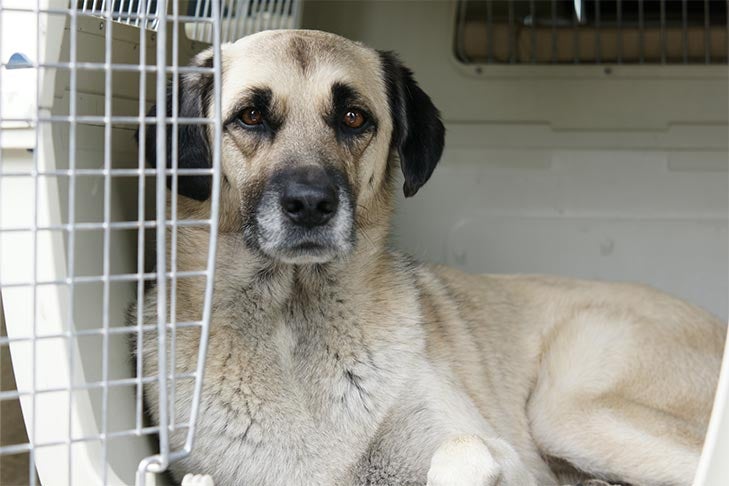
Despite all its uses, there are times when you shouldn’t crate your dog. Lane says never crate your dog any longer than they’re comfortable or can hold their bladder. And never crate your dog if it causes stress or panic. Watch for pacing, shaking, scratching, or biting at the door, long bouts of howling or barking, or drooling.
If you need to be out of the house longer than your dog can manage, Lane recommends having a dog sitter or dog walker check on your pet and let them out to go to the bathroom and get some exercise. Another option is doggy daycare or creating a safe puppy-proofed space inside your home, such as inside a playpen or a gated area in your kitchen, where your dog has space to sleep and potty.
Using Rewards for Crate Training
To ensure your dog looks forward to their crate, they must form positive associations with it. That means never using the crate for punishment or leaving your dog inside for too long. Instead, use rewards to teach your dog to love their crate. To start off, Lane advises sitting next to the crate with a big handful of your dog’s food or bite-sized treats. “Anytime your dog approaches their crate, toss a treat inside. For as long as they stay inside their crate, you can continue to give them treats every 5–10 seconds.”
It’s also important that your dog goes into their crate voluntarily. Lane suggests leaving the crate door open and making it as comfortable as possible. However, use caution when putting a bed or blankets inside. Many puppies prefer to go potty on soft, porous surfaces like these. It’s best to wait until your dog consistently doesn’t have accidents or shred fabric to add these items for extra comfort.
Let your dog discover rewards on their own. “When your dog is not paying attention, grab a smelly treat that your dog loves. Put a few pieces of it inside their crate towards the front so they can find it easily, then leave the crate door open and walk away. At some point, your dog should pass by their crate and find their surprise treat!”
Finally, Lane prescribes giving your dog a food-stuffed chew toy anytime you put them inside their crate. Freezing the stuffed toy first will help it last even longer. These special treats will keep your dog busy and provide a positive association with crate time. And be sure to provide water in the crate as well.
Common Crate Training Challenges

Dogs who haven’t yet been taught how to relax in their crate will often whine or bark while inside it. When vocalizing begins within minutes of your dog going inside, it’s likely due to stress or anxiety. This is particularly common in puppies who haven’t yet been taught to be alone. In these cases, you need to introduce your dog to their crate more gradually and add additional positive experiences. On the other hand, barking or whining after your dog has been settled for a while is more likely to indicate boredom, hunger, or need to go to the bathroom.
We often think crate training can treat separation anxiety, but these dogs often panic in their crate. Although you might want to protect your home from destructive behavior, dogs can end up hurting themselves while trying to escape. For dogs showing signs of anxiety, consider using a larger, puppy-proofed safe area — such as a gated-off area or an exercise pen — instead of a crate, and work with a professional dog trainer or animal behaviorist.
Finally, dogs can show a reluctance to enter their crate. Lane says sometimes that can be due to the way the crate door closes, especially if it makes a noise or has swung shut and hit the dog by accident. If you suspect that’s the case, switch to a different style of crate. But for any dog that doesn’t want to go inside, Lane advises you to stop using the crate while you go back to basics. “Start by sitting next to their crate and tossing treats in without closing the door. Then slowly build up the duration they can be happily inside with the door closed.”
Tips for Successful Crate Training
A dog of any age or breed can be taught to love their crate. But Lane points out that senior dogs can suffer from aches and pains or arthritis. Keeping them inside a crate for too long may be physically uncomfortable. Her advice is to leave them in a larger area where they can move between several comfortable places throughout the day.
The most important tip for crate training is to move slowly and at your dog’s own pace. Never force your dog inside or leave them to cry it out. Don’t crate them longer than they’re ready for. Lane says practice, patience, and consistency are key. Here are more tips for crate training success:
- Choose the right style of crate. For example, some dogs prefer a wire crate so they can see the world around them, while others settle better in a darker, more den-like crate, such as one with a removable cover.
- Meet your dog’s potty and exercise needs before putting them in their crate.
- Place your dog’s crate in a relatively quiet area. Lane says it’s unfair to expect them to relax or sleep if there’s a lot of commotion or excitement.
- Crate train when your dog is already calm or sleepy.
- For safety, always take your dog’s collar off when they’re in the crate.
Key Takeaways
- Crate training helps prepare dogs for veterinary visits, travel, boarding, emergencies, and everyday management.
- A properly sized crate can support potty training and help prevent destructive behavior.
- Crates should never be used as punishment or for dogs experiencing panic or severe anxiety.
- Positive reinforcement, treats, and enrichment activities help dogs develop positive associations with their crate.
- Successful crate training requires patience, consistency, and gradual progress at the dog’s comfort level.
Frequently Asked Questions
-
Why should every dog learn to be comfortable in a crate?
+
According to Rachel Lane, M.Sc., CPDT-KA, CBCC-KA, dogs may encounter crates during veterinary visits, boarding stays, emergency evacuations, or travel. Learning to relax in a crate beforehand can help reduce stress in these situations.
-
Can a crate help with potty training a puppy?
+
Yes. A properly sized crate can support potty training by limiting opportunities for accidents and encouraging puppies to hold their bladder until they are taken outside.
-
Should I crate a dog with separation anxiety?
+
Not necessarily. Some dogs with separation anxiety may panic in a crate and risk injury while trying to escape. Dogs showing signs of separation anxiety may benefit more from a larger puppy-proofed area and professional behavioral support.
-
What should I do if my dog cries or barks in the crate?
+
The reason matters. Dogs may vocalize because of stress, anxiety, boredom, hunger, or a need to go outside. Identifying the cause can help you determine whether more crate training, additional exercise, or a bathroom break is needed.
-
How can I make my dog's crate a place they enjoy?
+
Use positive reinforcement by offering treats, meals, toys, and food-stuffed enrichment items in the crate. Allow your dog to enter voluntarily and gradually build positive experiences over time.