AKC is a participant in affiliate advertising programs designed to provide a means for sites to earn advertising fees by advertising and linking to akc.org. If you purchase a product through this article, we may receive a portion of the sale.
Thinking about flying with your dog? Many airlines allow dogs to travel, but successful air travel requires careful planning. Before booking a trip, make sure your dog is healthy enough to fly, review the airline’s requirements, and prepare your dog to spend time in a carrier or crate. A little prep goes a long way toward making the experience safer and less stressful for both you and your dog.
In This Article
Can You Bring a Dog on a Plane?
Many airlines allow dogs to fly, but it’s always a good idea to contact the airline directly before purchasing tickets. Most airlines limit the number of dogs allowed per flight and require advance reservations for pets.


Dogs generally travel either in an airline-approved carrier under the seat in front of their owner or in a crate in the cargo hold. As much as you might want your dog sitting right next to you, airlines won’t let you buy them their own seat.

How Do Dogs Travel on Planes?
How your dog travels will largely depend on their size and the airline’s policies.
In-Cabin Travel
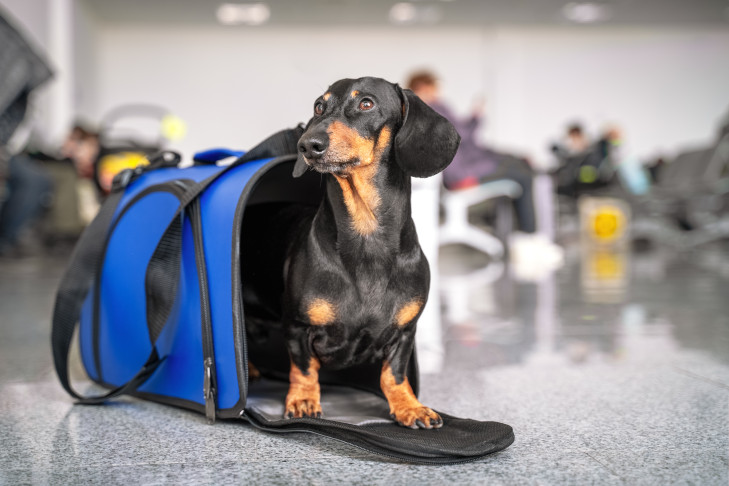
Small dogs can often travel in the cabin as long as they remain inside an approved carrier that fits beneath the seat in front of the owner. Throughout the flight, dogs must remain in their carriers and cannot sit on their owners’ laps.
Cargo Travel
Larger dogs generally must travel in cargo in an airline-approved crate. If your dog will be flying in cargo, direct flights are often the best option because they reduce handling and travel time. Airlines may also suspend cargo pet travel during periods of extreme heat or cold.
Flying With a Service Dog
The only dogs permitted to travel openly in the cabin are trained service dogs assisting people with disabilities. Since 2021, emotional support animals are classified as pets and must follow standard airline pet policies, including carrier requirements.
What Size Dog Can Fly in the Cabin?
Your dog’s size is often the deciding factor in whether they can ride with you in the cabin or must travel in the cargo area.
Airline Weight Limits
Weight limits vary by airline, which is why it’s important to contact the carrier directly before booking travel. Even when airlines publish general guidelines, restrictions may differ depending on aircraft type and route.
Typical weight limits include:
- In-cabin travel: The combined weight of your dog and carrier must usually be under 20 pounds, though many U.S. airlines focus more on whether the carrier fits under the seat than on a strict weight cutoff.
- Cargo or checked baggage: The combined weight limit for the dog and crate usually maxes out between 70 and 150 pounds.
Carrier Size Requirements
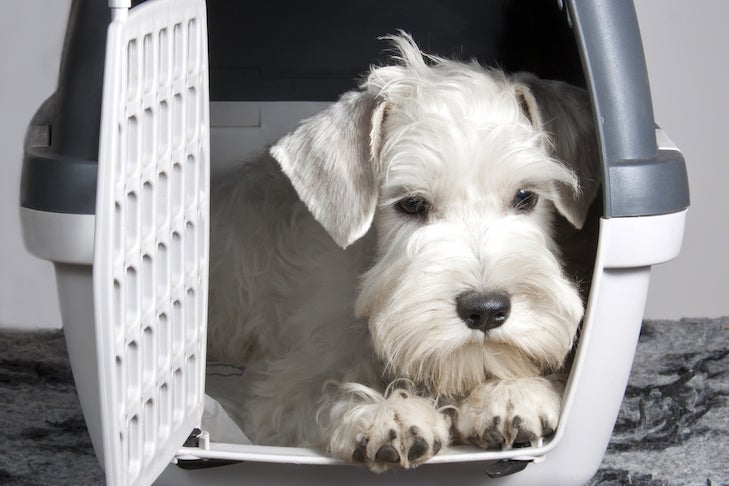
Airline-approved carriers must meet the airline’s size requirements. As a general rule, carriers should be waterproof and be big enough for your dog to sit, stand, lie down, and turn around comfortably. The carrier must also fit beneath the seat in front of you.
Requirements for Flying With a Dog
Flying with a dog requires you to follow both airline policies and destination-specific regulations. Requirements can vary widely, especially if you’re traveling internationally.
Health and Vaccination Requirements
Before flying, schedule a visit with your veterinarian to confirm your dog is healthy enough to travel. Even if a health certificate isn’t required for domestic travel, your veterinarian can review your dog’s overall health, confirm their vaccinations are current, and provide an updated rabies certificate if needed.
“Traveling by air can be stressful to people and to dogs,” explains Dr. Jerry Klein, Chief Veterinarian for the American Kennel Club.
Changes in routine, water, food, medication schedules, and time zones can be tough on dogs, particularly those with underlying health conditions. To help ease the transition, stick as closely as possible to your dog’s regular feeding schedule, adjusting gradually for time zone changes. If you have any questions about how to safely adjust medication timing, contact your dog’s veterinarian.
Age and Breed Restrictions
Some destinations and airlines impose age or breed restrictions for traveling dogs. Be sure to carefully review an airline’s specific policies before purchasing a ticket for your dog.
Documentation for Domestic and International Travel
Documentation requirements depend on where you’re traveling. For international travel and dogs entering the United States, additional paperwork may be required.
Under Centers for Disease Control and Prevention (CDC) regulations that took effect in August 2024, dogs entering the United States must:
- Be at least 6 months old
- Have an International Organization for Standardization (ISO)-compliant microchip
- Be immunized against rabies
If you’re returning to the U.S. with a dog or importing a dog into the country, you’ll also need to complete the CDC Dog Import Form before you arrive.
Additional requirements may apply to dogs arriving from countries designated as “high risk” for rabies, and some dogs may be subject to quarantine.
Preparing to Fly With Your Dog
A little preparation in the weeks before your departure date can go a long way in making your travel experience smoother and help you avoid complications.
Should Your Dog Fly?
Not every dog is a good candidate for air travel. Airports, planes, crowds, unfamiliar sounds, and new environments can all be a lot for a dog to handle. Before planning a trip, talk with your veterinarian about whether flying is a good fit for your dog.
If your dog has a history of carsickness or motion sickness, let your veterinarian know. Depending on your dog’s overall health, your veterinarian may prescribe medication that will help your pet feel more comfortable during their trip.
Never give your dog any medications before traveling without first consulting your veterinarian. Some medications, such as tranquilizers or sedatives, can increase the risk of heart or respiratory problems in dogs and generally aren’t allowed by airlines.
Health Checklist Before Flying
In the days before you head to the airport, be sure to:
- Schedule a veterinary appointment
- Confirm vaccination records are current
- Obtain any required health documents
- Pack prescription medications
- Bring sufficient flea and tick preventatives if needed
- Pack enough specialized or prescription food for the entire trip
What to Pack for Your Dog
When packing for your trip, pack enough of your dog’s essential supplies for both the journey and potential travel delays, including:
- Vaccination and health records
- Airline-approved carrier or crate
- Portable food and water bowls
- A small supply of food in your carry-on
- Treats
- Poop bags
- Pet wipes
- A safe chew item
Training and Behavior Preparation
Getting your dog comfortable with their crate well before your trip can make a big difference in how they handle flying.
Introduce the carrier early, and use praise and treats to create a positive association with it. It can also help to expose your dog to busy, dog-friendly environments so they become more comfortable around crowds, noise, and unfamiliar activity.
Airlines expect dogs to behave appropriately during travel. Skills taught through the AKC Canine Good Citizen (CGC) program, such as walking through crowds and remaining calm around other dogs, can help prepare dogs for the airport environment.
What to Expect at the Airport and On the Plane
What happens once you arrive at the airport depends on whether your dog is traveling in the cabin or in cargo.
If your dog is traveling in cargo, you’ll typically need to check them in with airline staff upon arrival. They’ll review your documentation and inspect the crate to confirm it meets the airline’s size and safety requirements before accepting your dog for the flight. If your dog is traveling in the cabin, you’ll usually still need to check in your pet’s reservation at the ticket counter before heading to security. However, the exact process can vary by airline, so confirm when you book.
If your dog is traveling in the cabin, they’ll go through Transportation Security Administration (TSA) screening with you. During screening, you’ll need to remove your dog from their carrier, so TSA agents can inspect it.
Most airports have designated pet relief areas after security. Be sure to give your dog an opportunity to relieve themselves before boarding.
Once you’re on board, dogs traveling in the cabin must generally remain inside their carriers for the duration of the flight. Providing a safe chew may help your dog relax and ease discomfort from pressure changes during takeoff and landing. Talking to your dog in a calm, reassuring voice and offering occasional treats for calm behavior can also help ease anxiety.
A favorite blanket or toy with a familiar scent may add extra comfort. If you’re considering a calming aid, such as a pheromone spray or anxiety vest, ask your veterinarian first to make sure it’s appropriate for your dog.
Tips for a Smooth Travel Experience
A little planning can go a long way in making flying easier for both dogs and owners. Whenever possible, book direct flights to reduce travel time and handling. If you’re traveling in the summer, consider early morning or evening departures to avoid the hottest temperatures. During colder months, midday flights may provide more moderate conditions.
If your dog is traveling in cargo, pay close attention to seasonal weather restrictions and airline policies, as some carriers suspend pet travel during periods of extreme heat or cold.
Before you head to the airport:
- Give yourself plenty of extra time.
- Make sure all documentation is readily available.
- Pack essential supplies ahead of time to help prevent last-minute stress.
With some advance planning, realistic expectations, and a little extra attention to your dog’s comfort, flying with your dog can be a safer, more positive experience for you both.
Key Takeaways
- Many airlines allow dogs to travel, but rules vary between carriers and destinations.
- Small dogs may travel in the cabin, while larger dogs typically travel in cargo.
- Carrier size, documentation requirements, health regulations, and airline policies should be reviewed before booking.
- Early carrier training and veterinary preparation can help reduce travel stress.
- Direct flights, proper planning, and understanding airport procedures can improve the travel experience.
Frequently Asked Questions
-
Can dogs travel in the airplane cabin with their owners?
+
Yes. Many airlines allow small dogs to travel in the cabin if they remain inside an airline-approved carrier that fits beneath the seat in front of the owner.
-
What size dog can fly in the cabin of an airplane?
+
Size requirements vary by airline, but most airlines require the carrier to fit under the seat. Many carriers also impose combined dog-and-carrier weight limits, often around 20 pounds.
-
When did emotional support animals stop receiving special airline accommodations?
+
Since 2021, emotional support animals have generally been treated as pets rather than service animals by airlines and must follow standard pet travel requirements.
-
What documents are required when flying with a dog?
+
Documentation requirements vary by airline and destination. Depending on the trip, you may need vaccination records, rabies certificates, health certificates, import paperwork, and proof of microchipping.
-
How can you prepare a dog for flying?
+
Preparing a dog for flying includes veterinary evaluation, carrier training, gathering travel documents, packing necessary supplies, and gradually helping the dog become comfortable with confinement and busy environments.