AKC is a participant in affiliate advertising programs designed to provide a means for sites to earn advertising fees by advertising and linking to akc.org. If you purchase a product through this article, we may receive a portion of the sale.
Housebreaking, house-training, or potty training — no matter what you call it, all new dog owners want to teach their new puppy not to mess inside their new home. The best way to achieve this goal is by establishing a timeline to follow, and sticking to it.
In This Article
Establishing a Routine
While you’re adhering to your timeline, it helps to firmly establish the rules for where your puppy should and shouldn’t eliminate. Dog crates and puppy pads can also be very useful training tools to assist you in establishing your potty training plan.
Potty Breaks When You Wake Up
Each day begins the same for you and your puppy. When the alarm clock goes off, wake up and get your puppy out of the crate and outside to do their business. Don’t stop to make coffee, check emails, or brush your teeth.
Always head out the same door to the same area where you want your puppy to potty, and keep them on a leash outside while training, even in a fenced yard, so you can see what’s happening and react immediately.

Potty Breaks After Meals and Water
Another morning ritual will be breakfast. After you take your puppy out to potty, they’ll be ready for their first meal of the day. Try to keep this scheduled at the same time each day. This will aid in regulating elimination, so you can set your watch to potty time.
After the meal, only wait between 5 and 30 minutes to take your puppy outside. The younger the puppy, the sooner they should be brought out after a meal to potty. As the puppy grows older, they’ll gain bladder control and learn to hold it longer each day. Most puppies eat three to four meals a day when they’re growing, and most puppies will have to poop after meals, so paying attention to this short follow-up period is important.
Also, remain watchful when the puppy drinks water. Treat this just like a meal, and take them out to potty soon afterward. Choosing a puppy food that digests well and avoiding feeding within 2 hours of bedtime will help.
Potty Breaks After Naps and Play
There are many other times that a young puppy will need to go potty, besides the first thing in the morning and after each meal. These instances include periods after naps and playtime.
Naps are mini-versions of the morning routine. Make sure that whenever your puppy is sleeping, you take them outside the moment they wake up.
During playtime, the stimulation of the digestive tract may also give your puppy the urge to have a potty break. Some seemingly random clues that a puppy needs to go out can include sniffing the floor or carpet, wandering away from the family, becoming overexcited with zoomies, whimpering, or running to the door. If you see any of these signs, take your puppy out to potty immediately.
Training Tools and Techniques
As you establish the routine of taking your puppy out after sleeping, eating, and playing, you also must focus on what to do once you’re outside.
Find a spot that will become the “potty spot,” and always take your dog to the same spot. Stand quietly and wait until they’re ready. As they commence, give a voice command or signal to “go potty” or “do your business.” Then wait for the results, and praise lavishly if your puppy goes. Say “good boy (or girl),” then give them a yummy treat.
Do this every time you’re outside (or indoors if using puppy pads or dog litter boxes), and soon enough, the puppy will understand that doing their business in the proper spot will bring lots of love and treats. Also, after they eliminate outside, play with your puppy for a few minutes before rushing back inside.
If your puppy doesn’t go when you’re outside, you may have to take them inside and come back out again in a few minutes. Even if they do go, they may need to head back out very soon, so stay vigilant.
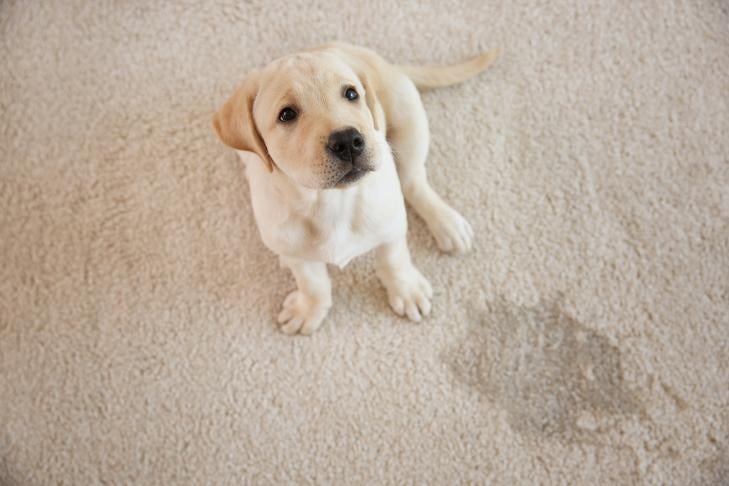
Handling Accidents Gracefully
Remember, if there are accidents indoors, don’t punish your puppy. If you catch them in the act, you can make a noise or say “uh-oh” to get their attention, and they’ll likely stop. Immediately, gently pick up your puppy, take them outside, and praise them heartily when they finish up. Always be sure to sanitize soiled indoor areas with appropriate pet stain cleaning products, so they’re not drawn to the same spot again.
Many owners have great results by also placing a bell on the door handle, and training their puppy to ring the bell when they need to go out. Start by ringing the bell as you exit with your dog. Be sure to praise the puppy as soon as they learn to ring the bell on their own.
Managing Time Away and Bedtime
When you have to leave home for several hours and your puppy needs to stay in a crate during the day, remember to plan ahead. If you’re unsure about how long your puppy can hold it, use the month-plus-one rule. Take the age of your puppy in months and add one, and that is the maximum number of hours that your puppy should be able to comfortably hold it between potty breaks. A 3-month-old puppy plus one equals 4 hours that they should be able to stay in the crate without a mess.
Remember that the last thing you should do before you go to bed for the night is to take your puppy out for one last potty break. They’ll usually be able to hold their bladder for a longer period when they’re asleep and not active.
Keeping the crate in or near your bedroom lets you hear a whimper or a whine if your puppy needs to go out during the night or before your alarm sounds. When they’re still small, you may be able to pick them out of the crate to carry them outside. This will prevent them from stopping and peeing on the floor on the way to the door.
Potty Training Timeline Expectations
“When it comes to how long potty training takes, it depends on the puppy and the schedule you keep,” says Dr. Jerry Klein, AKC Chief Veterinarian. “If training begins early, a 6-month-old puppy is usually able to be depended on most of the time to eliminate outside. However, if you feel that you’re not making progress, you should have the puppy checked out by a veterinarian. They may have a urinary tract infection or some other health issue causing the delay in house-training.”
By scheduling meals, walks, playtime, and other activities in a daily routine, you and your puppy will be on your way to success in potty training. But remember, it won’t happen overnight, so patience is key.