With over 200 AKC-recognized breeds, modern dogs come in many shapes and sizes. From the tiny Chihuahua to the giant Irish Wolfhound, it’s hard to believe they’re the same species. It’s even more shocking that all dogs are descended from gray wolves. The range of traits seen in today’s dogs is often attributed to Victorian Era breed clubs. But new research has shed light on the physical structure of early dogs thousands and thousands of years ago. Did early dogs uniformly resemble wolves like today’s Siberian Husky, or was there variety in their appearance? How did dogs evolve to be what we see today?
In This Article
How to Measure Dog and Wolf Skulls

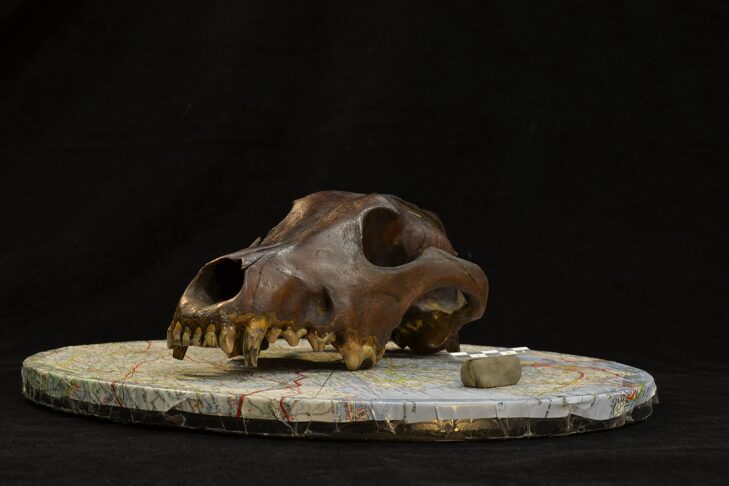
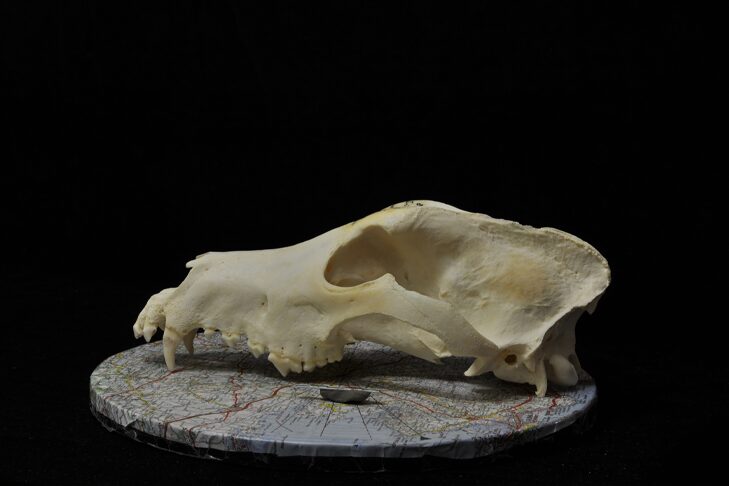
In a research paper published in the journal Science, a team of over 30 scientists conducted an intensive 3D study of 643 dog and wolf skulls. The skulls came from both modern animals and archaeological specimens. Rather than taking just a few measurements, the team placed 30 3D reference points on every skull, then used a computer to compare how those points related to one other. This technique captured the entire shape of each skull so the team could see how those shapes changed over time.
Dr. Carly Ameen of the University of Exeter’s Department of Archaeology and History is the co-lead author of the study. Dr. Ameen says that the technique “allows us to detect subtle differences in skull shape that might be missed by traditional measurements that only compare say 2 or 4 reference points (like length and width). It gives us a much more detailed picture of how dog skulls changed through time, exactly what parts of the skull were changing, and how diverse early dogs really were.”
-

- Photograph of an archaeological canid skull used for the photogrammetric reconstruction of 3D models in the study.
-
- Photograph of a modern dog skull used for the photogrammetric reconstruction of 3D models in the study.
Dog-Shaped Skulls Appeared 11,000 Years Ago
The team discovered that the first signs of dog-shaped skulls appeared about 11,000 years ago. Although these dog-shaped skulls didn’t show the extreme shapes we see in modern dog breeds, these early skulls were generally shorter and broader than wolf skulls. This is one of the hallmarks of domestication.
What surprised Dr. Ameen was how different these early dogs were. “By around 11,000 years ago, dogs displayed roughly half of the skull variation seen across modern dogs. While they didn’t look like modern Pugs, Bull Terriers, or Borzois, they were far from being a uniform population of wolf-like animals.”
Interestingly, the size range of the 11,000-year-old skulls fully overlapped with the size range in modern dogs. But that doesn’t mean there were Yorkshire Terrier and Great Dane-sized dogs back then. The study focused on skulls, not complete body size, and skull dimensions didn’t allow the team to easily estimate the overall size of the early dogs. However, Dr. Ameen says they didn’t find any evidence for the most extreme forms that characterize some modern breeds. She says the giant breeds and miniature dogs we know today are largely products of much more recent selective breeding by humans.
What Caused the Diversity in Early Dogs?
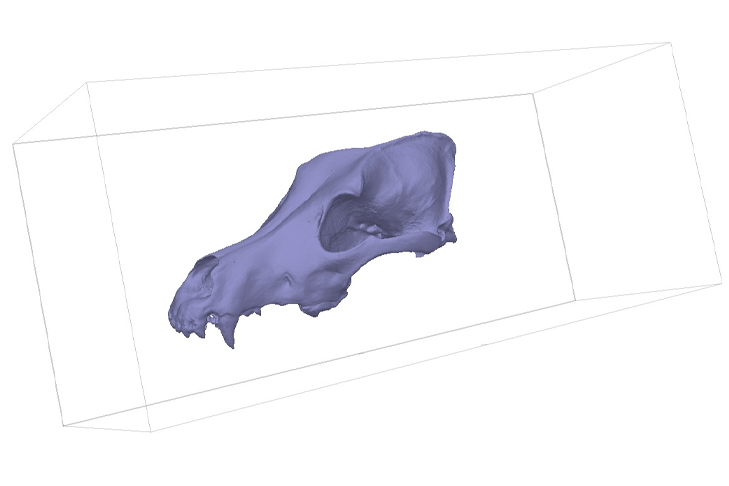
Example of a 3D model of a modern wolf skull used in the analyses.
So why was there so much variation in those 11,000-year-old dog skulls? Dr. Ameen explains that just like today, the earliest dogs lived alongside humans. We both occupied a wide range of environments, from Arctic regions to temperate forests. And later dogs joined us in farming communities. All the different human groups probably relied on dogs for a variety of purposes like hunting, guarding, companionship, and transport.
“We think this diversity arose through a combination of human influence, human preference, and environmental pressures,” says Dr. Ameen. “Different ecological conditions, diets, and lifestyles likely favored different traits in dogs. So rather than being the result of formal breeding programs, early dog diversity reflects thousands of years of adaptation to different human and environmental contexts.”
When Did Dog Domestication Occur?
When dog domestication began is still not entirely known. It’s a hotly debated topic. But the study does provide an important reference point. The domestication process must have started earlier than 11,000 years ago because it would have taken generations of dogs for those changes in skull shape and size to form.
Although evidence for intentional breeding by humans at that time is limited, Dr. Ameen says the early diversity lines up with dogs filling different roles in human societies. She says that the process could still mean a mix of active human selection, self-domestication, or a combination of factors. “What our findings indicate is that by 11,000 years ago, dogs were already established as domestic animals,” she notes. “They were diversifying in response to different ecological and cultural contexts.”
What Caused the Extreme Diversity of Modern Dogs?
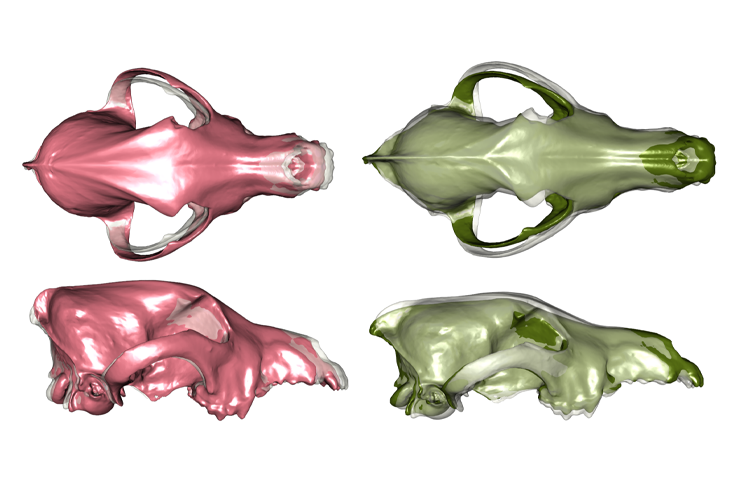
Today’s dogs show even more extremes in shape and size than early dogs. But why? It’s largely the result of recent deliberate selective breeding for those extremes. This is especially in the last few centuries when formal breed standards were established.
This lines up with the finding noted earlier. By the Mesolithic period (also known as the middle stone age), dogs already showed almost half the diversity we see today. It suggests that modern breeding didn’t create diversity from scratch, but that it greatly amplified and formalized a variation in dogs that has deep prehistoric roots.
The Challenges of Studying Early Dogs
However, it’s difficult to pinpoint the exact time of those roots. Dr. Ameen explains that domestication is a gradual process that unfolded over thousands of years rather than a single point in time. And early in that process, dogs would have looked very similar to wolves, making it challenging to tell the difference in the archaeological remains. Also, there are relatively few well-preserved specimens from the suspected time period of domestication, around 20,000 to 15,000 years ago. “This creates gaps in the evidence,” she says. “Together, these factors make it difficult to identify a precise moment when some wolves became dogs.”
Despite these challenges, we know dogs were the first species humans domesticated, and they have been evolving alongside us ever since. Dr. Ameen is excited by the team’s findings because they show that the extraordinary diversity of modern dogs has much deeper roots than many people realize. “By studying ancient dogs, we are not only learning about canine history; we are also learning about human history. The story of dog evolution is ultimately a story about one of the longest and most influential partnerships in the natural world, and one that is very familiar to dog lovers across the world today.”
Key Takeaways
- New research found that dogs already exhibited substantial physical diversity about 11,000 years ago.
- Ancient dogs displayed roughly half of the skull variation seen across modern dogs.
- Early diversity likely developed through adaptation to different environments and human lifestyles rather than formal breeding programs.
- The findings suggest dogs were already established as domestic animals by 11,000 years ago.
- Modern breeding intensified and standardized variation that had existed in dogs for thousands of years.
Frequently Asked Questions
-
How diverse were dogs 11,000 years ago?
+
Researchers found that dogs living 11,000 years ago displayed approximately half of the skull variation seen across modern dog breeds. Although they lacked the extreme features of many modern breeds, they were far from being uniform wolf-like animals.
-
Did ancient dogs look just like wolves?
+
No. While early domestic dogs still shared similarities with wolves, their skulls were generally shorter and broader. Researchers found clear differences that distinguished these dogs from wild wolves.
-
When did dog domestication begin?
+
The exact timing remains uncertain, but this research suggests domestication occurred before 11,000 years ago because substantial physical differences and diversity had already developed by that time.
-
What caused early dog diversity?
+
Scientists believe early dog diversity developed through a combination of environmental pressures, human influence, geographic differences, diet, and adaptation to a wide variety of roles within human societies.
-
Did modern breeders create all dog diversity?
+
No. The study indicates that much of the variation seen today has ancient origins. Modern breeding programs expanded and formalized traits that were already present in early dog populations.
-
What is the biggest challenge in studying ancient dogs?
+
One of the biggest challenges is distinguishing early dogs from wolves because the earliest domestic dogs likely looked very similar to their wild ancestors. Limited archaeological remains also create gaps in the scientific record.