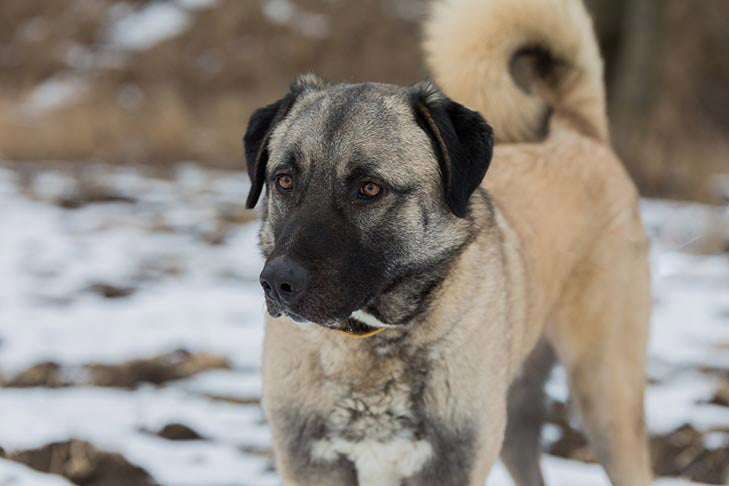
The Anatolian Shepherd Dog (ASD) is an ancient livestock guardian breed known for its independence, intelligence, and protective instincts. Developed in Turkey to defend flocks from predators, these powerful dogs can weigh up to 150 pounds and have played important roles in agriculture and wildlife conservation.
Here are 10 fascinating facts about the Anatolian Shepherd Dog.
They Were Bred to Guard Flocks From Predators
Unlike herding breeds that move livestock from place to place, Anatolian Shepherd Dogs focus on defense: watching over flocks and protecting vulnerable animals from predators rather than directing their movement.
In modern-day Turkey, formerly known as Anatolia, the breed is still used to guard flocks and property. Their independent decision-making continues to make them effective working dogs.
Anatolian Shepherd Dogs Are a Giant Breed
The Anatolian Shepherd Dog is one of the largest dog breeds recognized by the AKC. Males can stand up to 29 inches, while females can reach 27 inches.
Weight varies considerably, with females typically weighing between 80 and 120 pounds and males between 110 and 150 pounds. To put that into perspective, a French Bulldog averages about 25 pounds and a Labrador Retriever about 70 pounds. Caring for a dog this size requires careful consideration and preparation.
ASDs Are an Ancient Breed
The history of the Anatolian Shepherd Dog stretches back thousands of years. Artifacts dating back to approximately 2000 BC describe a large, strong dog from Anatolia with characteristics similar to those of the modern Anatolian Shepherd Dog.
References to large flock-guarding dogs also appear in the biblical Book of Job, which is set in Turkey and dates back to around 1800 BC. These historical records suggest the breed’s ancestors have been working alongside livestock for millennia.

Independence Is in Their Nature
One of the breed’s defining traits is independence. Historically, Anatolian Shepherd Dogs often worked at great distances from people while guarding livestock.
Because they sometimes needed to fend for themselves, they learned to hunt small animals such as gophers for food. Their instinct is to care for themselves and the flock with minimal instruction, a characteristic that remains noticeable in the breed today.
They Were Exported From Turkey Relatively Recently
Although the breed may have existed for thousands of years, Anatolian Shepherd Dogs were not widely exported from Turkey until the 20th century.
The dogs were considered highly valuable, which limited their distribution outside the country. American ranchers began importing the breed more regularly in the 1950s, but Anatolian Shepherd Dogs remained relatively uncommon in the United States until the 1970s.
They Were Derived From the ‘Coban Kopegi’
The Anatolian Shepherd Dog originated in Anatolia, the Asian portion of Turkey, also known as Asia Minor.
Early civilizations needed dependable dogs capable of protecting sheep and goats from predators. The breed’s predecessor was known as the “Coban Kopegi,” which translates to “shepherd’s dog.” Over time, these working dogs evolved into the Anatolian Shepherd Dog known today.
A Government Project Brought Them to the U.S.
The first Anatolian Shepherd Dogs likely arrived in the United States in the late 1930s as part of a Department of Agriculture project designed to identify the most effective sheepdog breeds.
According to the story, Secretary of Agriculture Henry Wallace learned about the breed while discussing the project with a Turkish ambassador during a White House dinner. The ambassador promised to send a male and female dog.
The project soon faced unexpected challenges. The female arrived pregnant and carrying a parasite. She gave birth to 12 puppies, and the growing costs of maintaining them led to the experiment being ultimately discontinued, and the dogs were sold.
The Endangered Species Act Gave Them a New Job
The Anatolian Shepherd Dog became increasingly valuable in the United States after the Endangered Species Act was passed in 1973.
Ranchers faced the challenge of protecting livestock from predators that could no longer be legally killed because of their protected status. Livestock guardian breeds such as the Anatolian Shepherd Dog provided a practical solution by discouraging predators from approaching flocks through their presence and protective behavior.
In Namibia, They Guard Cheetahs, Too
Since 1994, Anatolian Shepherd Dogs have been part of conservation efforts in Namibia.
One factor contributing to the decline in cheetah populations was conflict between ranchers and wildlife. To reduce livestock losses and discourage the killing of cheetahs, Namibia’s Cheetah Conservation Fund encouraged ranchers to use Anatolian Shepherd Dogs as livestock guardians.
The results have been significant. Farms using guardian dogs have reported livestock-loss reductions of 80 to 100%, benefiting both farmers and cheetah conservation efforts.
ASDs Have Appeared in Films
The Anatolian Shepherd Dog’s intelligence and trainability have helped the breed earn roles in film productions.
Movies featuring Anatolian Shepherd Dogs include “Cats and Dogs,” “Kate and Leopold,” and “Friends With Benefits.”
Key Takeaways
- The Anatolian Shepherd Dog is an ancient livestock guardian breed developed in Turkey.
- These powerful dogs can weigh as much as 150 pounds and are among the largest AKC-recognized breeds.
- The breed is known for its independence and ability to make decisions while protecting livestock.
- Anatolian Shepherd Dogs help protect livestock from predators in the United States and around the world.
- Their work in Namibia has helped reduce livestock losses while supporting cheetah conservation efforts.
Frequently Asked Questions
-
Are Anatolian Shepherd Dogs livestock guardian dogs?
+
Yes. Anatolian Shepherd Dogs were developed specifically to guard sheep, goats, and other livestock from predators. Their primary role is protection rather than herding.
-
How big do Anatolian Shepherd Dogs get?
+
Males can reach up to 29 inches tall and weigh between 110 and 150 pounds. Females can reach 27 inches tall and typically weigh between 80 and 120 pounds.
-
Where did the Anatolian Shepherd Dog originate?
+
The breed originated in Anatolia, the Asian region of Turkey. It was developed over centuries to protect livestock in challenging environments.
-
Are Anatolian Shepherd Dogs independent?
+
Yes. The breed is known for its independent nature and ability to make decisions without constant human direction, traits that helped it succeed as a livestock guardian.
-
How do Anatolian Shepherd Dogs help conservation efforts?
+
Anatolian Shepherd Dogs help reduce conflicts between livestock owners and predators. In Namibia, they have been used to protect livestock, reducing losses and supporting cheetah conservation.