AKC is a participant in affiliate advertising programs designed to provide a means for sites to earn advertising fees by advertising and linking to akc.org. If you purchase a product through this article, we may receive a portion of the sale.
If it feels like your dog’s hair ends up everywhere, you’re not imagining it. Pet hair clings to fabrics, settles into furniture, collects in cars, and can even find its way onto freshly washed clothes.
In This Article
While there’s no way to eliminate shedding entirely, the right cleaning tools, laundering techniques, and grooming habits can make a big difference. Here’s how to remove dog hair from just about every surface and keep it from taking over your home.

Why Dog Hair Sticks to Everything
Pet hair clings the way it does because it’s naturally charged with static electricity. This causes it to grip to fabric surfaces like carpets, bedding, and clothes.
Lying on couches, beds, or even our laps presses a dog’s hair into the fibers, making it more difficult to remove. Each strand of hair also has overlapping, raised cuticle layers that act like microscopic barbs. These structures help protect the coat from water and debris, but also make hair more likely to cling to woven textures. Think wool rugs or cotton T-shirts.
Dog hair is also lightweight and quite aerodynamic. A small draft, or gust of wind from an open door or air vent can carry loose hair from the floor to a nearby chair, making it seem like your dog’s hair is everywhere.
The Best Tools for Removing Dog Hair
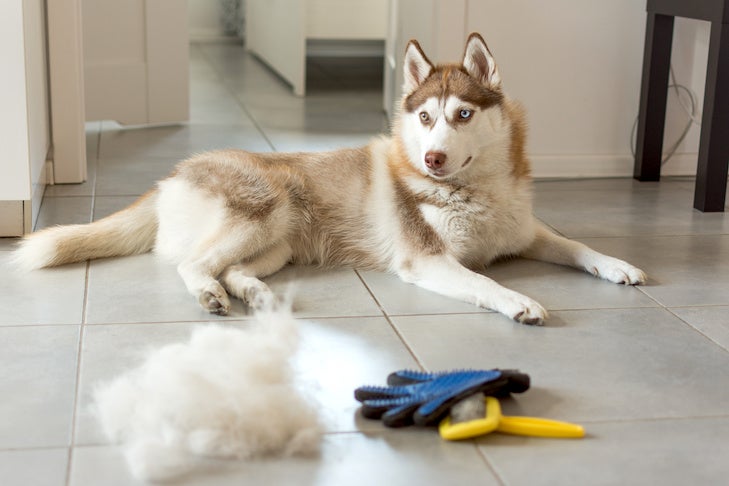
Some dogs shed more than others, which means a basic lint roller isn’t always enough. Keeping a few specialized tools on hand can make cleanup faster and more effective.
- Pet Hair Remover: Reusable rollers use a static electricity charge to pick up pet hair as you roll them across furniture and clothing.
- Pet Hair Vacuum: A handheld vacuum designed for upholstery and tight spaces can quickly remove loose fur.
- Carpet Rake: This helps pull embedded hair from couches, carpets, car seats, and more.
- Rubber Broom: This helps pull out pet hair from carpets or gather it from hardwood floors.
- Detailing Tool: This is useful for removing hair trapped in couch corners and other hard-to-reach crevices.
How to Remove Dog Hair From Carpets and Rugs
Dog hair often settles deep into carpet fibers, especially in high-traffic areas. A thorough approach works best.
- First, use a heavy-duty pet vacuum to remove as much loose pet hair and debris as possible.
- For any spots with stuck-on fur, go in with a rubber broom to loosen up any embedded hair and get it out of tough crevices.
- Vacuum again to move the loosened hair.
Regular maintenance prevents fur from becoming deeply packed into the carpet. It also makes future cleaning easier.
How to Remove Dog Hair From Couches and Furniture
If your dog spends a lot of time lounging on the couch with you, chances are they’re leaving things behind. Furniture can quickly become a magnet for loose fur. Removing the hair before it becomes embedded in upholstery fibers is key.
- Vacuum cushions, cracks, and underneath furniture with a handheld vacuum.
- For any stubborn hair that the vacuum misses, use a pet hair roller. This can also be used to spot-clean furniture between deep clean sessions.
- For corners, seams, and curved surfaces, use a detailing tool to pull out trapped fur.
Leather furniture requires a slightly different approach. Because hair doesn’t embed as deeply, wiping surfaces with a microfiber cloth or duster can help gather loose fur.
How to Remove Dog Hair From Clothes
Cotton, fleece, and other soft fabrics readily trap pet hair during everyday movement and friction.
- Use a lint roller or rubber glove on your clothes to remove as much hair as possible before running your clothes through the wash.
- Before washing, put hair-covered clothes into the dryer with a no-heat or air-only cycle for about 10 minutes. The tumbling will help remove some of the fur from the fabric fibers. The lint trap will also catch a large portion of the loose hair.
- Wash clothes as you would normally. You can also use pet hair dissolving formula for a deeper clean.
To reduce future pet hair buildup, you can store your clothes inside out. Once you’re ready to wear them, change into your clean clothes right before you leave the house. You can also use dryer sheets to help reduce static that attracts pet hair.
How to Remove Dog Hair From Blankets and Bedding
While you can spot clean your blankets and bedding with a lint roller or pet hair remover, you’ll need to give them a deep clean to truly get rid of pet hair.
- Before washing blankets and sheets, shake them outdoors to remove loose fur.
- Run a slightly damp rubber dish glove over the blanket. The rubber and static create friction that turns hair into easy-to-grab clumps.
- Vacuum flat surfaces using an upholstery attachment.
- When washing, add half a cup of white vinegar to help loosen trapped pet hair from fabric fibers.
Be sure to regularly clean out the lint trap and check your washer’s inner tube for accumulated fur. This can affect how well your machine works if left unattended and fur builds up.
How to Remove Dog Hair From Car Interiors

Dogs can leave hair throughout vehicle interiors, especially on seats, floor mats, and in hard-to-reach crevices. Working from the largest concentrations of hair to the smallest makes cleanup more efficient.
- Remove crates, seat covers, bedding, and any of your dog’s other items.
- Wash any removable fabrics according to the manufacturer’s instructions.
- Use a handheld vacuum, paying special attention to areas between seats and floorboards.
- Use a lint roller or fur removal tool to collect any remaining fur.
- Finish by wiping hard surfaces, like the dashboard and door panels, with cleansing wipes.
To make future cleanup easier, consider using a crate or pet-specific seat cover to help contain the fur.
How to Prevent Dog Hair Buildup
Some breeds naturally shed less than others. Breeds such as the Poodle, Bedlington Terrier, and Portuguese Water Dog are known for producing less loose hair. Many double-coated breeds, including the Golden Retriever, shed throughout the year.
“The thing that we talk the most about with our clients is being more proactive and getting ahead,” says David Maher, director of clients at Biscuits & Bath. “If you’re using a lint roller, you’re already behind. The best fix is a consistent, expert grooming schedule.”
Maher recommends maintaining a regular brushing routine between professional grooming appointments. Using a slicker brush at least weekly can help remove loose undercoat hair before it ends up on floors, furniture, and clothing. Brush in the direction of hair growth and continue until less hair is being collected.
“We’re all looking for a quick-fix shortcut,” Maher says. “This is the shortcut. Do it more frequently, and if you don’t want to do it, find a groomer who will.”
Bathing can also help reduce shedding. Maher notes that shedding-control shampoos and conditioners help remove loose hair, while maintaining coat health. Professional groomers may also use force dryers after bathing to blow away any remaining loose fur before the dog goes home.
Regular grooming offers benefits beyond a cleaner home. Brushing helps prevent issues like matting, supports coat health, and gives you an opportunity to notice any unusual lumps, bumps, or skin changes that you might want to bring to your vet. It’s a win-win for everyone.
Key Takeaways
- Dog hair clings to surfaces because of static electricity, coat structure, and normal household airflow.
- Pet hair rollers, handheld vacuums, carpet rakes, and rubber brooms can make dog-hair cleanup faster and more effective.
- Removing dog hair from carpets, furniture, clothing, bedding, and vehicles often requires a combination of vacuuming and targeted hair-removal tools.
- Running hair-covered clothing through an air-only dryer cycle before washing can help loosen fur and improve laundry results.
- Consistent brushing, bathing, and professional grooming can reduce shedding and help prevent dog hair from accumulating throughout the home.
Frequently Asked Questions
-
Why does dog hair stick to furniture and clothing so easily?
+
Dog hair carries static electricity and contains tiny cuticle layers that help it cling to fabrics, upholstery, carpets, and clothing. These characteristics make pet hair difficult to remove once it becomes embedded.
-
What is the best tool for removing dog hair from furniture?
+
Handheld vacuums, reusable pet-hair rollers, and upholstery-specific detailing tools are often the most effective options for removing dog hair from furniture and cushions.
-
Can a dryer help remove dog hair from clothes?
+
Yes. Running clothes through a no-heat or air-only dryer cycle before washing can loosen pet hair and move much of it into the dryer’s lint trap.
-
How often should I brush my dog to reduce shedding?
+
The ideal brushing schedule depends on your dog’s coat type, but weekly brushing is a good starting point for many breeds. Heavy shedders may benefit from more frequent grooming.
-
Does professional grooming help reduce dog hair around the house?
+
Yes. Professional grooming can remove large amounts of loose undercoat and shedding hair before it ends up on furniture, clothing, carpets, and other household surfaces.