Studies suggest that at least 80% of dogs over the age of 3 show signs of periodontal disease. If plaque and tartar buildup is left to progress, this condition can cause tooth loss, bone damage, infection and systemic health issues.
In recent years, anesthesia-free dog teeth cleaning has gained popularity, with some grooming salons, pet stores, and even veterinary practices offering the service. The appeal is understandable. These procedures are marketed as a more affordable way to improve a dog’s dental health without the perceived risks of anesthesia. However, veterinary specialists caution that while these techniques can make teeth look cleaner, they don’t address the underlying causes of periodontal disease.
What Are Anesthetic-Free Dental Procedures For Dogs?
Anesthetic-free dentistry (AFD), often referred to as anesthesia-free tooth scraping, involves restraining your dog while they’re awake to remove tartar from the visible surface of their teeth.
Select dog grooming salons, pet stores and veterinary practices offer this service, and the tools and techniques utilized vary depending on the provider. Some use an ultrasonic toothbrush, which emits high-frequency vibrations to dislodge tartar. Most also use sharp scaling tools that scrape tartar from the tooth surface.
What Are the Risks of Anesthetic-Free Dental Procedures For Dogs?
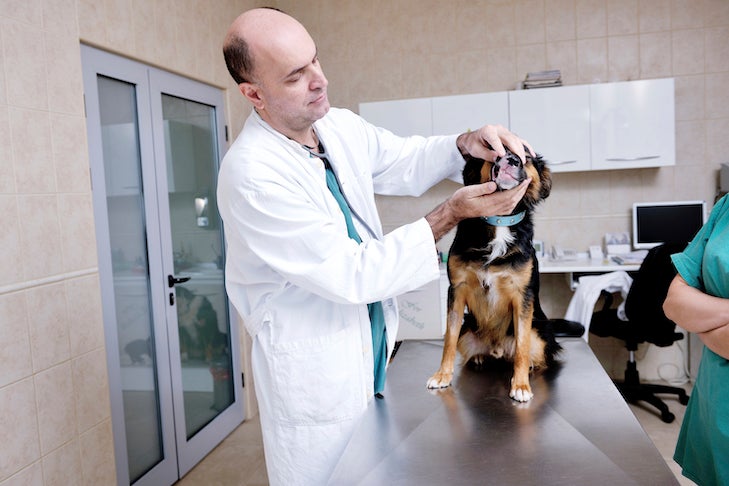
The idea of an anesthetic-free dental for your dog may appeal if you have concerns about the costs or potential for complications associated with professional cleanings under anesthesia.
However, the risks associated with anesthetic-free dental services for pets have resulted in the American Veterinary Dental College® (AVDC) issuing a position statement on their use. The AVDC “strongly opposes anesthesia-free dentistry for companion animals, deeming it inappropriate and a form of malpractice,” according to their statement. These procedures do not include a complete examination, fails to treat subgingival disease, and also poses serious risks of injury for the dog and the operator. “True oral health requires anesthesia to allow for a examination, intraoral radiographs, and access to subgingival areas, which are crucial for diagnosing and treating dental disease,” the AVDC writes.
They suggest they’re not a suitable replacement for comprehensive dental procedures performed under anesthesia in terms of safety and effectiveness. Here’s why.
Superficial Cleaning
Dr. Naomi Hoyer is a Board-Certified Veterinary Dentist™ and the Chair of the Advocacy Committee for the AVDC. She explains that periodontal disease starts with gingivitis (early stages of gum disease) and can progress to periodontitis (severe gum infection) and bone loss if left untreated.
Scraping calculus (hardened plaque) off the visible surface of your dog’s teeth can make them look whiter and cleaner. However, it won’t halt the progression of periodontal disease, which originates below the gumline.
“These procedures can give a false sense of security, delay proper care, and allow dental disease to progress, often silently, painfully and uncontrolled,” explains Dr. Travis Henry, National Specialty Director for Veterinary Dentistry at Thrive Pet Healthcare.
He explains that, without anesthesia, it’s impossible to properly scale below the gumline, perform probing, or take dental X-rays. “It has been proven that, without dental x-rays, we can miss 30% of the dental disease in a dog’s mouth,” Dr. Henry says. “This means that serious issues like abscesses, bone loss, fractured teeth, or oral tumors are likely to be missed.”
Risk of Injury and Stress
The risk of injury while probing around an awake, restrained dog’s mouth is very real, especially when they’re fidgety or anxious. A sudden movement or mistake can lead to the sharp scaling instruments causing lacerations to the dog’s oral tissue, or the handler. Plus, a dog that is frightened or in pain could bite. Dr. Hoyer explains that she has seen dogs with broken teeth after instruments were used with too much force. “I have even seen a dog with a broken jaw,” she says.
Dr. Henry adds that many dogs with severe calculus accumulation are older and painfully arthritic. “Forcibly restraining these patients can exacerbate these conditions,” he says.
Plus, a stranger restraining a dog with their mouth held open and a sharp object prodding around in this sensitive area isn’t something many will be comfortable with. “This can cause long-term fear and anxiety in these patients and result in them being less compliant with owner-performed oral care at home,” Dr. Hoyer says.
Risk of Additional Dental Problems
When your dog has a dental cleaning under anesthetic, the veterinarian will polish the surface of the teeth after scaling them. This doesn’t typically happen during anesthetic-free procedures. “Hand scaling teeth without polishing leaves the tooth surface rough and increases the ability of plaque and calculus retention,” Dr. Henry explains.
Ethical Concerns
The level of training, legal requirements, and marketing of anesthetic-free dental services for dogs vary widely. They are often marketed in ways that can be misleading to you as a pet owner. “In reality, they fail to meet the standards of medical dentistry and may violate local veterinary practice laws when performed by non-veterinarians,”Dr. Henry says.
Why Are Veterinary Dental Procedures Safer and More Effective?

A comprehensive professional veterinary dental is much more than a cosmetic procedure. Dr. Hoyer explains that all the following things should take place, and none would be possible safely or without stress if the patient isn’t anesthetized:
-
Complete intraoral exam with probing and charting
-
Full mouth dental X-rays to identify hidden problems not visible during an oral exam
-
Scale and polish of all the tooth surfaces
-
Subgingival (below the gum line) cleaning of every tooth
-
Any required treatment, such as extractions, biopsy, or gingival surgery
Modern veterinary practices use pre-anesthetic testing, tailored anesthetic protocols, and close monitoring with high-tech equipment during the procedure. This makes the risks associated with dog anesthesia extremely low, especially compared to the long-term damage resulting from untreated dental disease.
Cosmetic cleaning may cost less upfront than a dental procedure under an anesthetic. However, there could be unidentified underlying dental problems. The bills to deal with them once they become a serious problem can be considerable, not to mention the additional discomfort and recovery time for your dog.
The Importance of Preventative Dental Care
The best way to minimize the need for extensive dental work is through preventative care. At home, dog toothbrushing is the gold standard. Daily brushing is preferable, but when this isn’t possible, Dr. Henry recommends aiming for a minimum of 5 days a week. “Brushing must be done before the [soft] plaque can mineralize and attach to the tooth,” he says. He explains that the process of it hardening into calculus takes 24 to 72 hours.
While nothing replaces the mechanical removal of plaque with a toothbrush, Veterinary Oral Health Council-approved products, such as chews and rinses, can also help. However, Dr. Hoyer cautions against using products that have the potential to damage teeth. “Elk antlers are the ones that we see right now that create significant tooth fractures, often necessitating extraction,” she says.
It’s also important to schedule annual veterinary check-ups, including oral exams. Dr. Hoyer explains that, in general, the smaller the dog, the earlier anesthetized preventative dentistry needs to start. “I have done anesthetized procedures on dogs as young as 1, where we identified bone loss and needed to extract teeth,” she says.
She recommends that every patient should be anesthetized by 2 years old to get a baseline set of intraoral radiographs. “In addition to identifying and preventing progression of periodontal disease, we’re also looking for broken, abnormal, or unerupted teeth, screening for oral cancer, and making recommendations for at-home preventive care.”
If cost is a concern, talk with your veterinarian about phased treatment plans, in-office assessments, or payment options. Early intervention often reduces overall expense and discomfort.
This article is intended solely as general guidance, and does not constitute health or other professional advice. Individual situations and applicable laws vary by jurisdiction, and you are encouraged to obtain appropriate advice from qualified professionals in the applicable jurisdictions. We make no representations or warranties concerning any course of action taken by any person following or otherwise using the information offered or provided in this article, including any such information associated with and provided in connection with third-party products, and we will not be liable for any direct, indirect, consequential, special, exemplary or other damages that may result, including but not limited to economic loss, injury, illness or death.