Dogs experience many of the same emotions as we do, and many of us would love to know exactly what our dogs are feeling. Do those flattened ears mean your dog feels guilty for chewing the baseboards, or do they mean your anger is stressing your dog? Although dogs have expressive faces, it can be hard to tell what they’re saying all the time. Read on to learn more about interpreting dog facial expressions.
In This Article:
Can You Read Emotions From Dogs’ Facial Expressions?
Since we’re so used to reading human emotions from facial expressions, it’s easy to assume we can do the same with dogs. But can we? A recent research study in the journal Anthrozoös looked at human perception of dog happiness. The results showed that people look at the surrounding context to determine how dogs are feeling, rather than looking at the dogs themselves. In other words, if the person thinks it’s a positive situation, then they perceive the dog as happy, and vice versa.
But that’s not fair to our dogs. In order to meet their needs, advocate for them, and build our bond, we need to appreciate their emotional state in any given situation. So, how do we do that? Thankfully, according to Dr. Kun Guo, PhD and Professor of Cognitive Neuroscience at the University of Lincoln, we can use dogs’ facial expressions to interpret how they’re feeling. “As facial expression is one of the major channels of emotional expression in humans and animals, it can be indicative of reflecting our inner thoughts, mental states (e.g., concentration), emotion, mood, and feeling. Hence, we can infer these mental processes by reading facial cues.”

Dog Facial Expressions Can Be Difficult to Read
A study in Scientific Reports found that dogs make more facial expressions when watched by another dog versus a human. Additional research published in the same journal found that dogs change their facial expressions based on whether or not a person is looking at them. These facial expressions indicate that dogs can communicate, rather than just making involuntary faces based on the situation. They’re trying to tell us something.
But most people aren’t getting the whole message. Recent research from Dr. Guo’s team, published in Applied Animal Behaviour Science, looked at whether humans could read dog emotions from video. People could recognize many dog emotions, and when looking at just the dogs’ faces, the human participants showed the highest accuracy in identifying anger. However, Dr. Guo says people consistently misinterpret certain dog facial expressions. “Humans often mistake positive anticipation as frustration, appeasement as happiness, distress as surprise, fear as happiness, and sadness as fear.”
So, although the potential to understand our dogs’ emotions through their facial expressions exists, we need to learn how to read them. Scientists are still analyzing different dog facial expressions to pinpoint exactly what they mean, but there are certain ones you should know to look for.
Position of a Dog’s Ears and Head

Ear position is important in dog communication, but can be hard for humans to read, particularly in floppy-eared or very furry dogs. It’s important to know what a dog’s neutral ear position looks like. For example, when relaxed, some dogs hold their ears slightly back while others hold them more upright. Every dog is unique, so you need to recognize your dog’s individual signals.
- Head tilt. A head tilt may be related to vision or hearing. It indicates a dog is gathering information and is therefore likely curious.
- Lowered head. This often indicates that a dog is feeling unsure and is trying to appease you. It’s a way of saying, “I come in peace.”
- Neutral ears. When a dog holds their ears in their usual position, you can assume they’re feeling relaxed.
- Pulled back ears. If a dog pins their ears flat against the side of their head, that is a sign of fear, anxiety, or stress. Pulled back ears can also be used as an appeasement signal in either a happy or fearful dog.
- Perked up ears. When a dog’s ears become closer together across the top of their head, you can assume that the dog is anticipating something positive.
- Forward ears. If a dog’s ears are held upright and more forward than usual, the dog is likely aroused and alert. They could feel this way due to frustration or be a precursor to aggression.
Shape of a Dog’s Eyes

Pay attention to the shape of your dog’s eyes, as well as their eyebrow position. Another important clue is eye contact. Dogs stare at people for loving or threatening reasons, but if a dog looks away, that may mean they’re feeling uncomfortable. They aren’t ignoring you, but instead asking you to calm down. Direct eye contact is threatening in dog language. Here are some other eye-related facial expressions to watch for:
- Whale eye. When a dog shows the whites of their eyes, it means they feel stressed or anxious. Known as whale eye, it’s important to recognize that you’re pushing a dog out of their comfort zone. If you don’t back off, they might feel the need to snap or bite.
- Squinting. When a dog’s eyes look soft and relaxed, that dog is relaxed, too. Sometimes dogs relax their eyelids so much that they look like they’re squinting. However, squinting can also be a sign of appeasement or fear.
- Hard eyes. If a dog’s eyes look cold as they turn a hard stare at you, this signals a threat. This dog could quickly turn aggressive.
- Staring. If a dog stares at you with soft eyes, it’s a look of love. But if the eyes are cold, back off and give that dog space.
- Blinking. Dogs may blink slowly when they feel comfortable and happy. On the other hand, rapid blinking can be a sign of stress or frustration.
- Puppy dog eyes. When a dog raises their inner eyebrow, it leads to that adorable puppy dog face. The dog might be sad or communicating with you that they want something.
Facial Expressions Involving a Dog’s Mouth and Nose
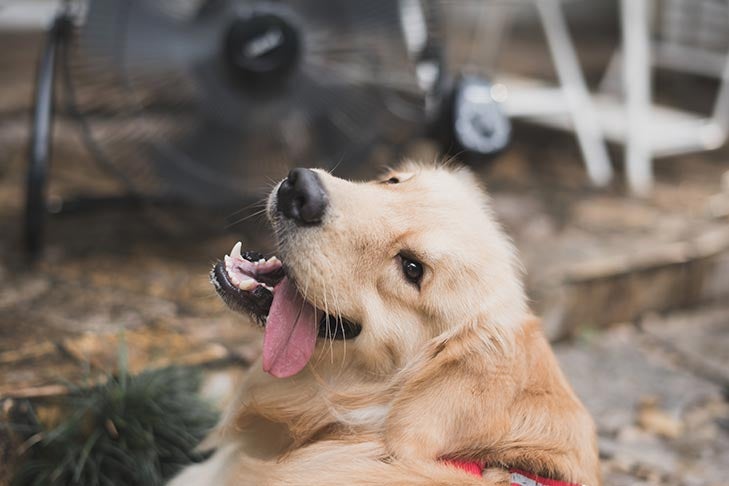
When a dog bares their front teeth, they’re likely threatening a bite. The wrinkled nose and pointy fangs are a clear warning. But there are other facial expressions that involve the mouth and nose, too. Watch for the following:
- Lip licking. When a dog licks their nose or lips, it can indicate that they’re feeling stressed or are communicating an appeasement signal.
- Tongue hanging out. Many happy and relaxed dogs let their tongues loll out the side of their mouths. But if the tongue is short and sticking out the front, it can indicate stress.
- Open mouth. Relaxed dogs often let their mouths hang open a bit. In contrast, a closed mouth can sometimes indicate tension.
- Smiling. Some dogs pull their lips back in what looks like a canine equivalent of a smile. Known as a submissive grin, this is usually a sign of happiness or appeasement.
- Yawning. Dogs yawn when they’re feeling anxious or stressed. Don’t be surprised if your dog responds to your yawn with one of their own.
- Panting. Although dogs pant to cool down, rapid or shallow panting can be a sign of stress.
Look at the Entire Dog to Accurately Read Facial Expressions
As you can see, many of these facial expressions have multiple meanings. The only way to be sure you’re correctly reading a dog is to look at their entire body. Dog body language is a package deal from the tip of the tail to the top of the nose. In fact, one of Dr. Guo’s studies in the journal Animal Cognition showed that, when reading emotional cues, dogs look more at each other’s bodies than they do at their faces. Dr. Guo recommends doing the same. Instead of relying on facial cues alone, “use more holistic cues, such as bodily cues, vocalizations, and contextual cues,” he advises.
If you can learn to read the whole dog, you’ll be far more successful at understanding dogs’ emotional states and intentions. That will lead to safer dog-human interactions, better care taking of your own dog, and improved dog welfare.