The English Foxhound is a versatile hunter and member of the Hound Group. This determined scenthound can be taught to hunt almost any ground-dwelling quarry, though they were traditionally — and still are — used for foxhunting. Here are some fun facts about this sociable field companion.
They Were Bred to Hunt Foxes
The English Foxhound is best known for its role in foxhunting. Thanks to an exceptional sense of smell, these dogs can follow the scent of foxes and similar prey, including coyotes, across long distances and varied terrain.
In mounted foxhunting, horse-mounted riders follow a pack of hounds as they track their quarry. Riders often rely on the hounds’ vocalizations to help determine the progress of the chase and the location of the scent trail.
Their History Dates Back to the 1500s
Early references to the Foxhound date to the late 1500s, when foxhunting became increasingly popular in Britain. By 1750, there were 50 Foxhound kennels in England, reflecting the breed’s growing importance.
The breed eventually made its way to the United States. Although the English Foxhound Stud Book of America was recording entries by 1890, records suggest the breed arrived even earlier. The AKC officially recognized the English Foxhound in 1909.
Foxhunting in America Evolved Over Time
Mounted foxhunting has been practiced in the United States since Colonial times. Over the years, the focus has shifted from harvesting the quarry to enjoying the pursuit and challenge of the chase.
Not every hunt is successful, as hounds can lose the scent trail. However, it’s considered a victory when the fox enters a hole in the ground, known as an earth. The hounds are rewarded, and the fox gets their freedom, perhaps to be chased again another day.
They’re Sturdier Than American Foxhounds
The English Foxhound is generally more heavily built than its cousin, the American Foxhound.
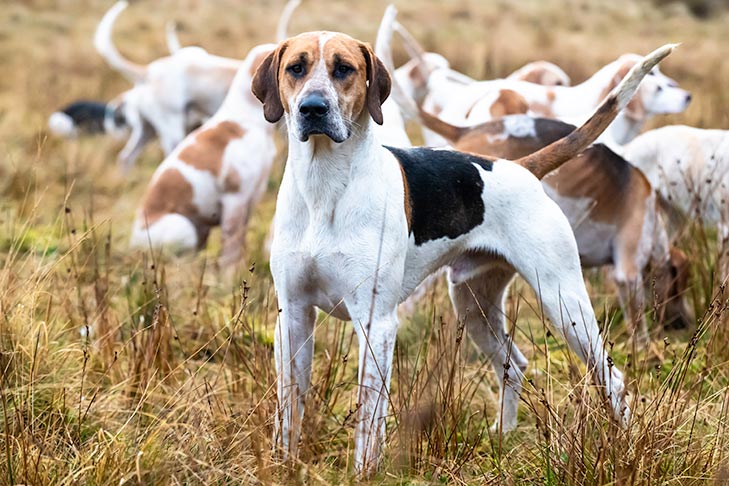
These large dogs typically stand about 24 inches tall at the withers. Their long, straight legs, deep chests, and level backs help support the endurance and strength needed for a day in the field.
English Foxhounds’ Coats Are Easy to Maintain
According to the breed standard, English Foxhounds may be black, tan, and white, any combination of those colors, or one of the various “pies,” which feature large white areas marked with patches of color.
Their short, dense, and glossy coat requires relatively little upkeep. Weekly brushing is typically enough to help control shedding and maintain a healthy appearance.

They’re Social Dogs That Thrive in a Pack
For generations, English Foxhounds were bred to live and work in packs. As a result, they generally get along well with other dogs and may be happiest when living alongside other English Foxhounds.
The breed is known for being gentle, friendly, and sociable. English Foxhounds usually enjoy the company of adults, children, horses, and many other household pets.
Training Requires Patience and Consistency
Like many scenthounds, English Foxhounds can become highly focused when they catch an interesting scent. Their powerful instincts can sometimes outweigh their desire to follow commands.
Training requires patience, consistency, and firm but calm leadership. Because of their independent nature and strong prey drive, these dogs are often best suited to experienced owners who understand the challenges of managing a hunting breed.

They Need Significant Daily Exercise
English Foxhounds were developed to pursue game for hours at a time, giving them impressive stamina and substantial exercise requirements. Most English Foxhounds today are owned by hunt associations that house them in kennels and keep them in shape for foxhunting by running them daily.
As companions, they are best suited to homes with ample space and opportunities for vigorous activity. They can also make great companions for jogging and hiking.
They’re Among the Rarest AKC-Recognized Breeds
The English Foxhound is considered one of the rarest dog breeds in the United States. In recent years, the breed has frequently ranked near or at the bottom of the AKC’s annual registration statistics.
As a result, many dog lovers may never encounter an English Foxhound outside of hunting circles or breed-specific events.
Their Bodies Are Built for Endurance
One of the breed’s most remarkable features is their physical endurance. The English Foxhound has a specialized chest and lung structure that supports long-distance galloping during a hunt.
This efficient anatomy allows for maximum oxygen exchange, helping the breed maintain stamina over extended periods of physical activity. Combined with powerful legs and an athletic frame, these traits make the English Foxhound exceptionally well suited for endurance work.
Key Takeaways
- The English Foxhound is an athletic scent hound originally developed for foxhunting.
- The breed’s history dates back to the late 1500s, and it was recognized by the AKC in 1909.
- English Foxhounds are friendly, pack-oriented dogs that generally get along well with people and other animals.
- Strong hunting instincts and independent tendencies make consistent training essential.
- These dogs have high exercise requirements and thrive in active homes with ample space.
Frequently Asked Questions
-
Are English Foxhounds good family dogs?
+
English Foxhounds are generally gentle, friendly, and sociable. They often get along well with adults, children, other dogs, and many household pets, provided their exercise and training needs are met.
-
How much exercise does an English Foxhound need?
+
English Foxhounds have high energy levels and were bred to run for long periods. They require substantial daily exercise and do best with activities such as running, hiking, or other endurance-focused pursuits.
-
What is the difference between an English Foxhound and an American Foxhound?
+
The English Foxhound is typically more heavily built and sturdier than the American Foxhound. It has a more robust frame while maintaining the endurance and scenting ability expected of a hunting hound.
-
Are English Foxhounds easy to train?
+
Training can be challenging because of the breed’s strong scenting instincts and independent nature. Consistent, patient training and experienced handling often produce the best results.
-
Do English Foxhounds get along with other dogs?
+
Yes. Because they were traditionally bred to live and work in packs, English Foxhounds generally enjoy the company of other dogs and often thrive in multi-dog environments.