Dog vomiting can range from a minor stomach upset to a sign of a serious medical condition. While occasional vomiting can be harmless, repeated or severe episodes might signal a more serious problem.
In This Article
Understanding what to watch for—and when to act—can help you support your dog’s health.
When Should You Go to the Vet?
Your next steps depend on the severity, frequency, and accompanying symptoms. Some cases resolve on their own, but others require immediate attention.
Dr. Rebecca Greenstein is the Veterinary Medical Advisor for Rover. She says you should contact your vet right away if your dog’s vomiting:
- Is frequent or severe
- Is accompanied by lethargy, poor appetite, and/or diarrhea
- Has continued for more than 4 to 6 hours
- Comes with signs of overall unwellness
- Contains blood, digested blood, or foreign material
- Has led to dehydration or debilitation
- Occurs in a dog with a history of concurrent illness
You’re not only your dog’s owner: you’re also their healthcare advocate. It’s important to act quickly. Talking to your veterinarian can go a long way in preventing complications and future vomiting episodes.
What Do Different Kinds of Dog Vomit Mean?
Although unpleasant to examine, your dog’s vomit can offer important clues about their health. The texture, color, and contents can help you understand their reason for throwing up.
Some things you might see in your dog’s vomit:
- Yellow, green, and/or white foam
- Undigested food
- Partially digested food
- Bright red blood
- Worms (i.e., parasitic roundworms)
- Foreign objects, like pieces of a shredded squeaker
- Grass or plant material
“Undigested food can be a sign that your dog snarfed their dinner too quickly, but can also mean problems with food exiting the stomach,” she explains. “Bilious vomiting (bringing up bile) is often associated with an empty stomach but can be seen with several different kinds of GI conditions as well. Vomiting ‘coffee grounds’ can mean digested blood, and seeing foreign material in the vomitus can be a red flag for a potential GI blockage.”
Managing Minor Vomiting Cases at Home
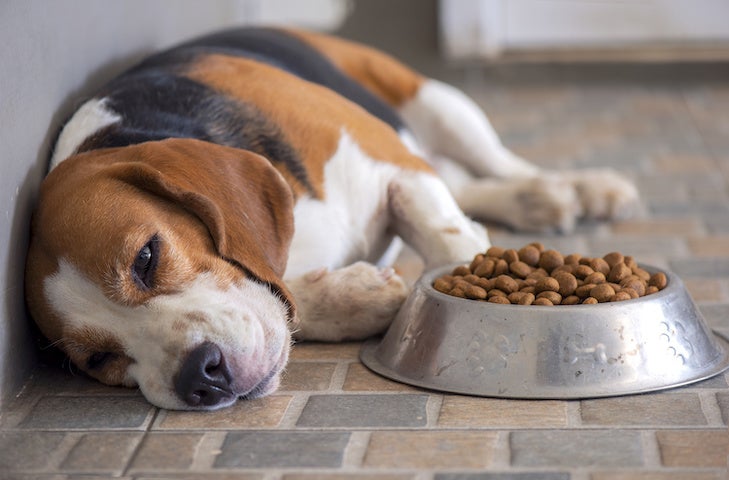
Not every instance of vomiting requires a trip to the vet. Sometimes perfectly healthy dogs will vomit without apparent cause and continue about their day as usual.
If your dog has one or two episodes but is otherwise acting normally, try the following:
- Withhold food and water for one to two hours, and monitor your dog closely
- If the vomiting stops, offer a small amount of water and continue watching for further vomiting
- If your dog is acting normally after several hours, offer a small amount of a bland diet, like boiled, skinless, boneless chicken breast
Other gentle, bland options that may help soothe upset stomachs in dogs include puréed pumpkin, skinned mashed potatoes, and lean ground turkey.
This approach only works well when vomiting is mild. If there are other symptoms like, like diarrhea, lethargy, or dry-heaving, more steps need to be taken. “If there is ongoing vomiting or any other abnormalities, don’t wait it out. Proceed directly to your vet,” Dr. Greenstein adds.
How to Stop Your Dog From Getting Dehydrated After Vomiting
Repeated vomiting can quickly lead to dehydration. As fluid losses increase, dogs may become weaker and less able to recover on their own.
“When dogs vomit repeatedly, they lose fluids and electrolytes. Dogs who are nauseous are also unable to keep food and water down, so they can’t easily replenish their fluid reserves, making dehydration worse,” says Dr. Greenstein.
Signs of dehydration in dogs include:
- Dry nose
- Panting
- Thick saliva
- Lack of energy
- Dry or sticky gums
- Loss of appetite
A dehydrated dog might be too uncomfortable to drink water from their bowl. In more serious cases, dogs may need veterinary care. That could mean the vet giving them intravenous fluids as part of their treatment plan to help them stay hydrated.
Does Eating Grass Make Dogs Vomit?

It’s a common misconception that if a dog starts to graze on grass, they’re doing it to induce vomiting. That’s not the case. Scientific studies show that less than 25% of dogs who eat grass throw up. Only 10% of dogs who ate grass showed signs of illness before eating it.
While grass consumption may sometimes irritate the digestive tract, there is no clear evidence that dogs routinely eat it to induce vomiting. So why do they do it?
“That’s a question my clients ask me all the time, and the answer is, scientists can only speculate, but we don’t actually know!” says Dr. Greenstein. “It has been theorized that eating grass is physically irritating, which can trigger nausea.”
Other reasons for grass-eating can include boredom, lack of fiber, or even just for fun. Thirsty dogs may also lick the moisture or dew from blades of grass on hot day.
What to Tell Your Vet if Your Dog Keeps Throwing Up
If your dog continues vomiting, the details you provide can help your veterinarian reach a diagnosis more quickly and determine the most appropriate treatment.
Some helpful details to have on hand include:
- Basic information about your dog’s age, weight, and medical history
- Whether you suspect (or confirmed) your dog ate a foreign object, like a sock or small toy
- Whether your dog may have eaten something toxic, like chocolate
- The number of vomiting occurrences
- Whether you have noticed any other troubling signs (bloat, sudden lack of energy, having a hard time pooping)
- The names of any medications your dog takes
- Steps you may have taken to address the vomiting
The more details you provide, the better equipped your veterinarian will be to help. Dogs rely on us to communicate what they cannot.
Key Takeaways
- Occasional vomiting may not be serious, but frequent or severe vomiting requires veterinary attention.
- Blood, foreign material, dehydration, lethargy, diarrhea, or prolonged vomiting are important warning signs.
- The color and contents of vomit can offer clues about digestive issues, blockages, parasites, or other health concerns.
- Mild cases may improve with short-term monitoring and a bland diet, provided no other symptoms are present.
- Detailed observations and a photo of the vomit can help veterinarians diagnose the problem more effectively.
Frequently Asked Questions
-
How many times can a dog vomit before seeing a vet?
+
A single episode in an otherwise healthy dog may not be an emergency. However, repeated vomiting, vomiting that lasts more than 4 to 6 hours, or vomiting accompanied by other symptoms should be evaluated by a veterinarian.
-
What does yellow foam in dog vomit mean?
+
Yellow or green vomit often contains bile. This can occur when a dog’s stomach is empty, but bilious vomiting may also be associated with several gastrointestinal conditions.
-
Can a dog become dehydrated from vomiting?
+
Yes. Repeated vomiting causes fluid and electrolyte loss, and nauseated dogs may be unable to drink enough water to replace what they lose. Severe dehydration may require veterinary treatment.
-
Should I feed my dog after vomiting?
+
If vomiting has stopped and your dog is acting normally, a small amount of water can be offered first, followed later by a bland diet. Ongoing vomiting or additional symptoms should prompt a veterinary visit.
-
Is eating grass a sign that a dog feels sick?
+
Not necessarily. Most dogs that eat grass do not vomit afterward, and researchers do not know exactly why dogs engage in this behavior. Possible explanations include boredom, fiber-seeking, curiosity, or simple enjoyment.
This article is intended solely as general guidance, and does not constitute health or other professional advice. Individual situations and applicable laws vary by jurisdiction, and you are encouraged to obtain appropriate advice from qualified professionals in the applicable jurisdictions. We make no representations or warranties concerning any course of action taken by any person following or otherwise using the information offered or provided in this article, including any such information associated with and provided in connection with third-party products, and we will not be liable for any direct, indirect, consequential, special, exemplary or other damages that may result, including but not limited to economic loss, injury, illness or death.