Choosing to bring a dog into your home isn’t a decision made overnight. Between the plethora of breeds to explore and your own day-to-day routine, there are many factors to consider when finding your “perfect” dog. If you’re a truly experienced dog owner seeking a large, intelligent watchdog, the Tibetan Mastiff may be a good option for you.
The Tibetan Mastiff’s Temperament
An aloof member of the Working Group, Tibetan Mastiffs are true guardians. They’re protective over their homes and humans, and can be territorial towards strangers. These large, muscular dogs are often considered an intimidating breed. While TMs are gentle giants with their loved ones, they’re significantly less open with unfamiliar faces. TMs are highly intelligent, but not an easy breed to train. They wouldn’t be a good choice for most first-time dog owners.
Physical Traits and Grooming Needs
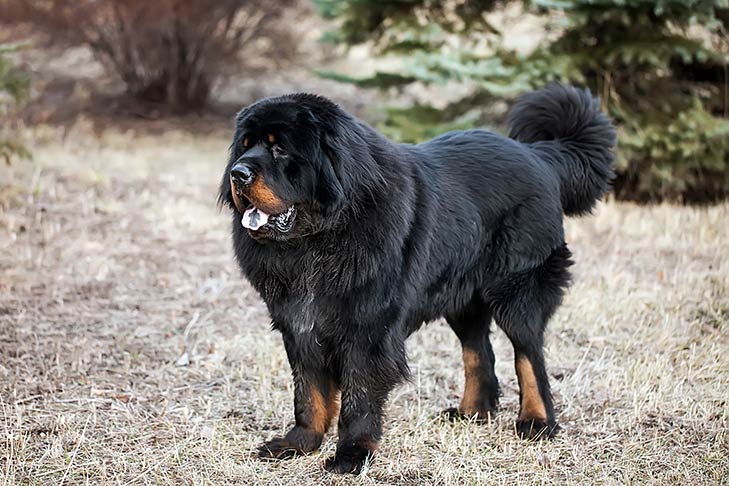
Tibetan Mastiffs are imposing dogs with powerful, muscular builds. These substantial dogs can stand up to 26 inches tall and weigh up to 150 pounds. TMs have broad heads with high-set, V-shaped ears and discerning brown eyes. Their double coats come in a variety of colors, composed of a wooly undercoat and coarse guard hair.
A TM’s grooming needs are likely the breed’s lowest maintenance feature. For the majority of the year, a weekly brushing to rid the coat of dirt and tangles is sufficient. TMs have a heavy shedding period in late spring or early summer where they “blow” their undercoat. To quell the intense shedding during this period, it’s best to use an undercoat rake or other de-shedding tool.
How Much Training Do Tibetan Mastiffs Need?
Tibetan Mastiffs typically don’t respond well to traditional obedience training. They’re a highly intelligent breed, but are stubborn and don’t tend to repeat what they already know. Tibetan Mastiffs aren’t particularly food-driven either, making treats a less reliable training tool. Early training and socialization are key in a TM’s development.
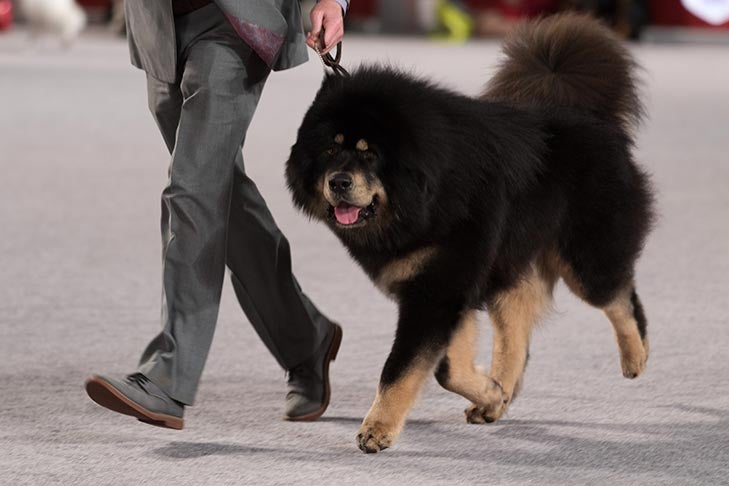
TMs are best suited for experienced dog owners, especially those well-accustomed to stronger-willed breeds. This isn’t to say a Tibetan Mastiff won’t listen to their owner. A TM will do what their owners ask and typically respect their judgment. However, a TM is ultimately more likely to follow their own instincts over anything else. Prospective owners should also note that TMs are “notorious” for giving an exemplary performance in a training class, but then ignoring all commands at home. TMs also don’t have reliable recall and shouldn’t be allowed off-leash.
Are Tibetan Mastiffs Good for Families?

If brought into a family with older children and an experienced, committed owner, a Tibetan Mastiff can make for a good family dog. If you’re seeking a true watchdog for your home, a TM is a strong contender. TMs are fiercely loyal to their loved ones and are prepared to protect them from any perceived threat. Large, territorial, and independent, it’s essential that a Tibetan Mastiff is properly socialized and trained from a young age.
How Social Are Tibetan Mastiffs?
Tibetan Mastiffs typically aren’t a social breed. They’re quite independent and aloof, and tend to only be loving towards family. TMs can be territorial around other dogs and strangers. Early socialization and proper training can help limit these less desirable traits, but a Tibetan Mastiff is ultimately a protector by nature.