AKC is a participant in affiliate advertising programs designed to provide a means for sites to earn advertising fees by advertising and linking to akc.org. If you purchase a product through this article, we may receive a portion of the sale.
Potty training is one of the most important lessons your puppy will learn. While dogs naturally prefer not to eliminate where they eat or sleep, they don’t automatically understand where you want them to go. Successful puppy potty training depends on consistency, supervision, positive reinforcement, and a predictable routine. By teaching your puppy where to potty and rewarding them for making the right choice, you can reduce accidents and help them learn faster.
In This Article
Take Your Puppy Out Frequently
Puppies have limited bladder control, which is why frequent potty breaks are essential during the early stages of training. A common guideline is that puppies can generally hold their bladder for about as many hours as their age in months, plus one.
In other words, a 4-month-old puppy may be able to hold it for up to five hours. However, with very young puppies or toy breeds, it’s often best to offer a potty break every hour whenever possible.
This guideline applies day and night. Until your puppy can sleep through the night without needing a bathroom break, expect some early-morning or overnight trips outside.

Make Outdoor Potty Trips Purposeful
Even if you have a fenced yard, using a leash during potty training can help keep your puppy focused. Potty breaks should be about going to the bathroom, not exploring, chasing leaves, or starting a play session.
Walk directly to the designated potty area each time and use a consistent cue such as “go potty.” Taking your puppy to the same location can encourage success because the lingering scent of previous bathroom visits signals the purpose of the area.
Reward Success Immediately
Positive reinforcement is one of the most effective potty-training tools. Whenever your puppy urinates or defecates in the correct location, reward them right away with a favorite treat, enthusiastic praise, or a brief play session.
Because dogs repeat actions that earn rewards, consistently reinforcing successful potty trips helps your puppy understand exactly what you want.
For overnight potty breaks, offer a small, high-value food reward or calm praise. Avoid energetic play, which could leave your puppy fully awake when you’d both rather return to sleep.

Anticipate Your Puppy’s Bathroom Needs
Much of potty training comes down to recognizing when your puppy is likely to need a bathroom break before an accident happens. Paying attention to both your puppy’s body language and their daily routine can help you stay one step ahead.
Most puppies display signs when they need to relieve themselves, such as:
- Sniffing the floor
- Circling
- Hunching their back
- Squatting
- Suddenly wandering away from activity
As soon as you notice these behaviors, take your puppy outside to their designated potty area, and be ready to reward success with praise or a treat.
Giving your puppy a predictable schedule can go a long way toward ensuring success. also makes potty training easier. Many puppies need to eliminate shortly after eating, waking up from a nap, or finishing an active play session. Keeping meals, exercise, rest periods, and bathroom breaks consistent makes it easier to predict when your puppy needs to go and reduces the risk of accidents.
Prevent Indoor Accidents Before They Happen
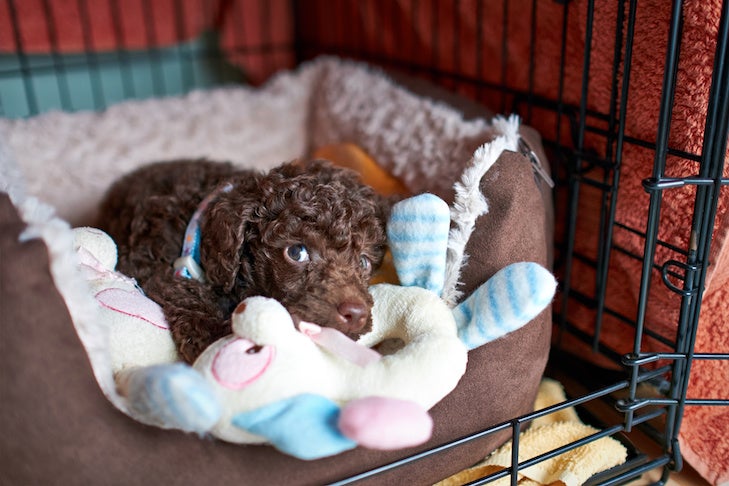
Management is a critical part of house training. A properly sized crate can be a valuable tool because most dogs prefer not to soil their sleeping area.
When your puppy is comfortable in their crate, it becomes a safe place to rest or enjoy a chew toy when you cannot actively supervise them. Crating can also help prevent accidents, provided your puppy isn’t left in the crate longer than they can comfortably hold it.
Beyond crate training, avoid giving your puppy unrestricted access to the entire house. Puppies who wander unsupervised may find quiet corners where accidents can occur unnoticed. Every indoor accident can reinforce the behavior because relief itself is rewarding, and lingering scents may encourage your puppy to return to the same location.
Until your puppy reliably lets you know when they need to go outside to potty, perhaps by barking or sitting at the door, close supervision remains essential.
Handle Accidents Calmly
Even the most diligent puppy owners will encounter accidents. When they happen, resist the urge to scold or punish your puppy.
Your puppy isn’t being stubborn, spiteful, or vindictive. Punishing them for a potty accident can create confusion, damage trust, and make some dogs reluctant to eliminate in front of people. In some cases, puppies may learn to hide when they need to go rather than developing proper bathroom habits.
Instead, stay calm and focus on prevention. If accidents occur repeatedly, consider whether your puppy needs more frequent potty breaks, closer supervision, or a more predictable routine.
Cleaning accidents thoroughly is also an important part of training. Dogs have an extraordinary sense of smell, and odors humans can’t detect may draw a puppy back to the same spot. Enzymatic cleaners made for pet messes can help break down odor-causing compounds in urine, feces, and vomit, removing scent cues.
Help Your Puppy Adjust to Bad Weather
Some puppies love rain, snow, and cold temperatures, while others hesitate to step outside when conditions aren’t ideal. Though you can train your puppy to go inside on potty pads or use a litter box for dogs, if your goal is for your adult dog to potty outdoors year-round, it’s helpful to build positive associations with different types of weather during puppyhood.
Start with short outdoor play sessions in wet, cold, or windy conditions and gradually increase the time you spend outside as your puppy becomes more comfortable. Positive experiences can help your puppy gain confidence and make future potty trips easier regardless of the forecast.
Key Takeaways
- Frequent potty breaks are essential because young puppies have limited bladder control.
- Take your puppy to the same potty location and use a consistent cue each time.
- Reward successful potty trips immediately with treats or praise.
- Close supervision and crate training can help prevent indoor accidents.
- Punishment is ineffective for potty accidents and can slow the training process.
Frequently Asked Questions
-
How long does it take to potty train a puppy?
+
Most puppies make significant progress within a few weeks, but complete potty training often takes several months. Consistency, supervision, and a predictable routine can help speed the process.
-
How often should I take my puppy out to potty?
+
Young puppies often need potty breaks every hour during the day. A general guideline is that puppies can hold their bladder for about their age in months plus one hour, although individual puppies vary.
-
Can crate training help with potty training?
+
Yes. Because puppies naturally avoid soiling their sleeping area, crate training can help reduce accidents and teach bladder control when used appropriately and humanely.
-
What are signs that my puppy needs to go potty?
+
Common signs include sniffing the floor, circling, squatting, hunching their back, or suddenly leaving an activity. Learning to recognize these signals can help prevent accidents.
-
What is the fastest way to potty train a puppy?
+
The fastest way to potty train a puppy is to follow a consistent routine, take them outside frequently, supervise them closely indoors, and reward successful potty trips immediately with treats or praise.
-
How do you break a puppy from peeing and pooping in the house?
+
Preventing indoor accidents requires close supervision, frequent potty breaks, and rewarding your puppy immediately for eliminating outdoors. Consistency and management help your puppy learn where you want them to go.
-
How long can puppies hold their pee?
+
A common guideline is that puppies can hold their bladder for approximately their age in months plus one hour. However, very young puppies and toy breeds often need potty breaks more frequently.
AKC GoodDog! Helpline is celebrating ten years of supporting dog owners. If you need support, experts at AKC GoodDog! Helpline are available by phone or video to answer any training questions that come up, from housetraining your puppy to unwanted behaviors in senior dogs. Join the nearly one million dog owners who trust AKC GoodDog! Helpline today.